
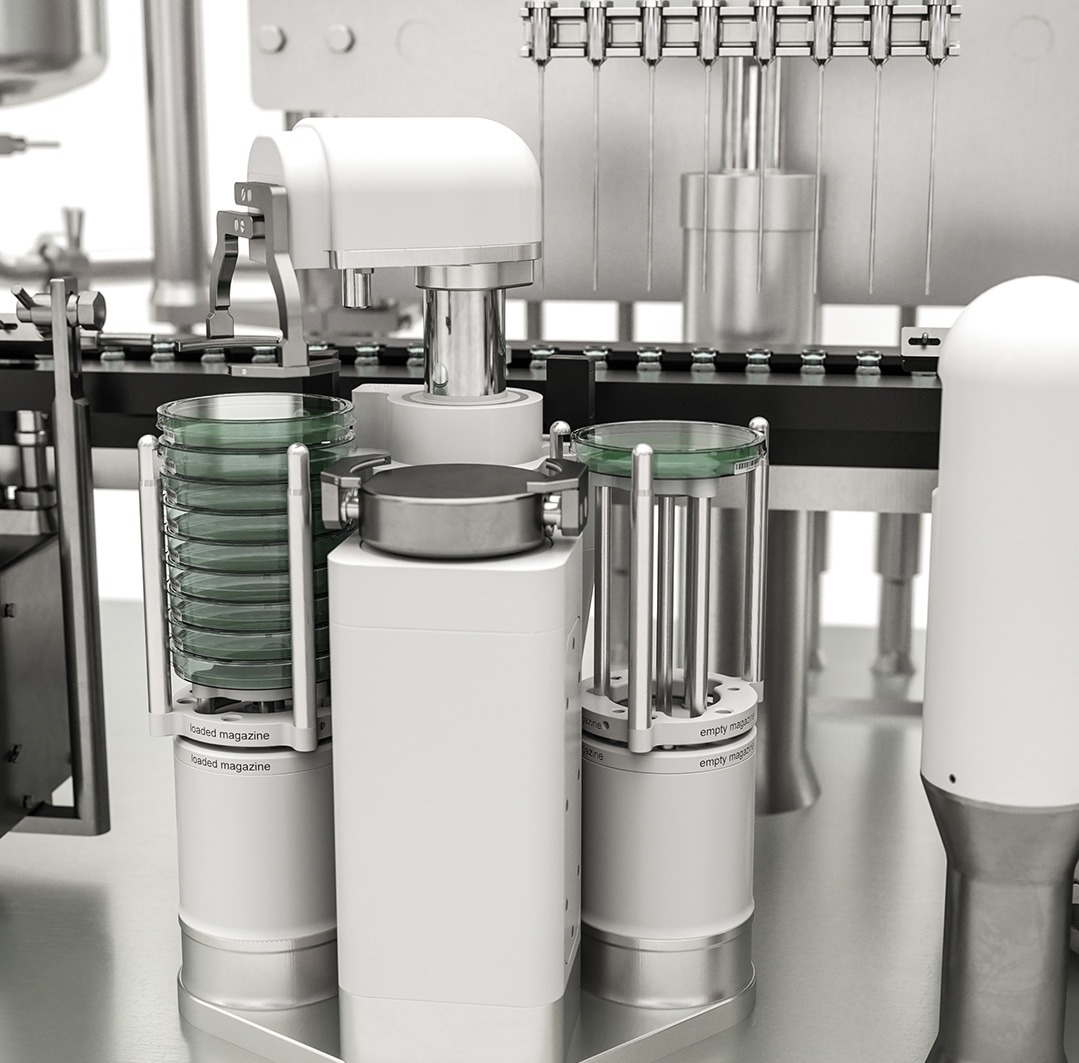
Regulatorische Compliance, bewährte Automatisierung, Echtzeit-Detektion
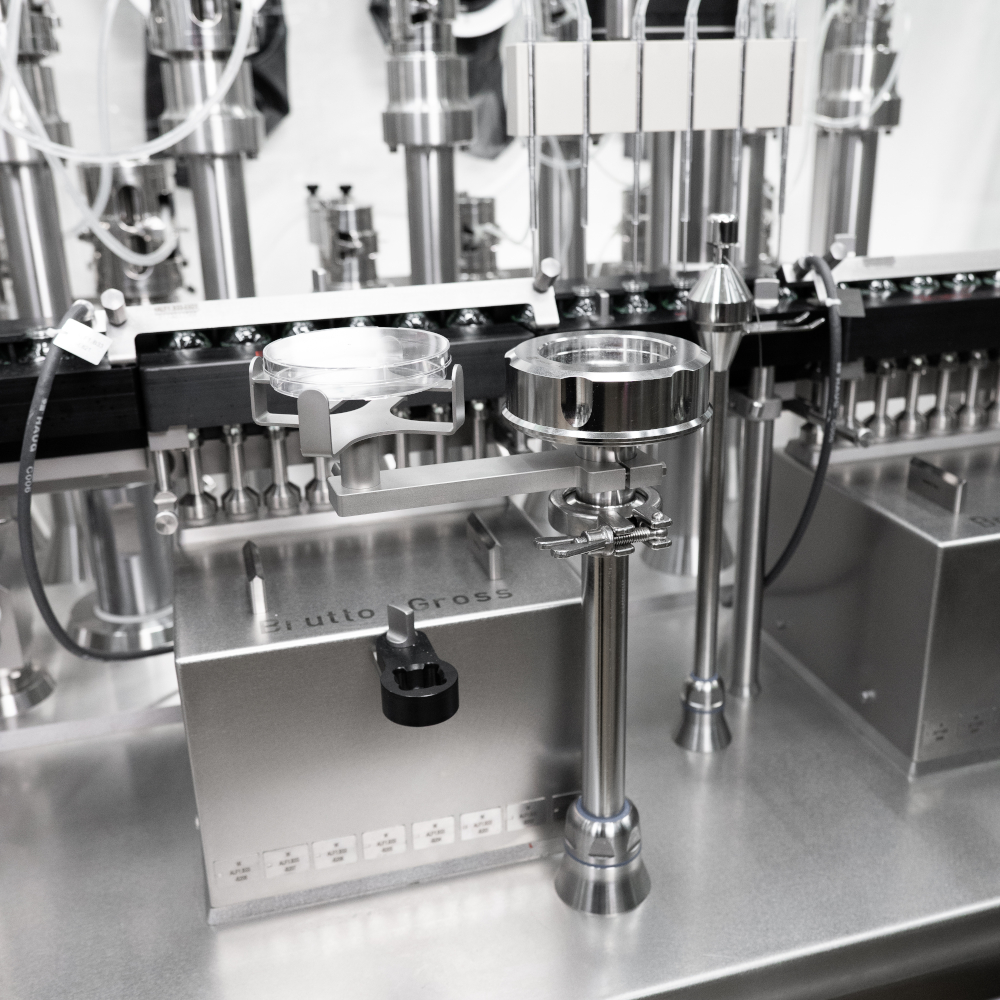

Finden Sie die richtige Reinraum-Monitoring-Lösung für Ihre Linie
Overall 4 Lösungen
Monitoring-Modus
Handling-Konzept
Integrationsfähigkeit
Auswirkung auf manuelle Eingriffe
Wechselintervall
Einsatzbereich
Daten und Rückverfolgbarkeit
Vorteile
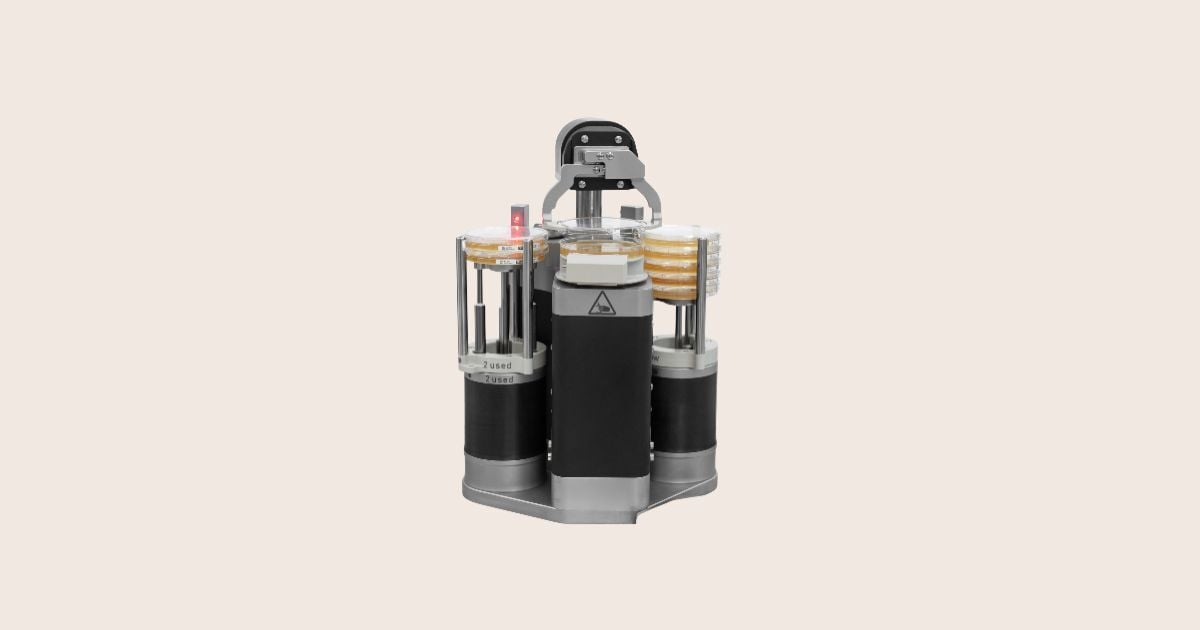
SPC 2000
Monitoring-Modus
Passives Keimzahlmonitoring
Handling-Konzept
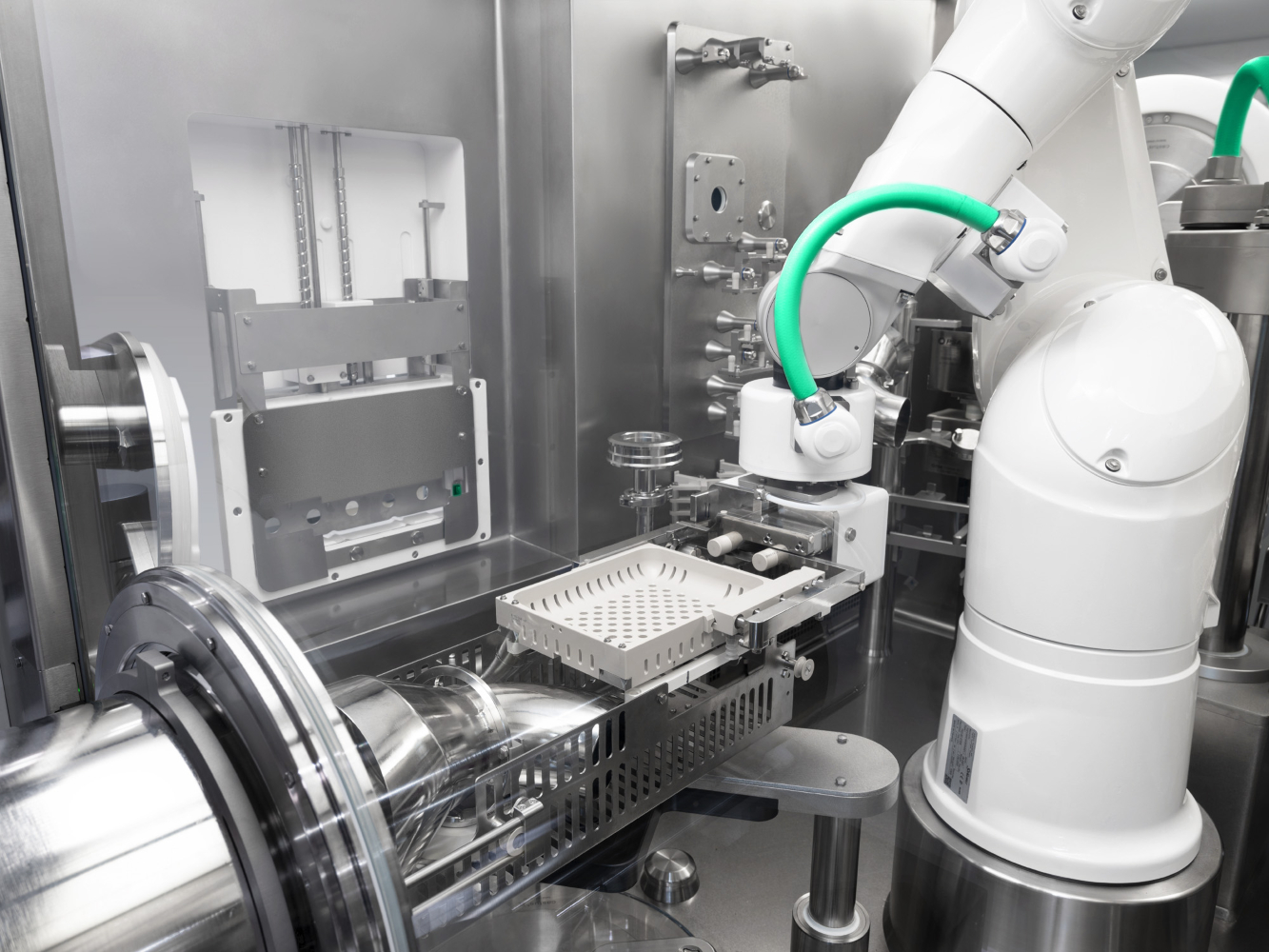
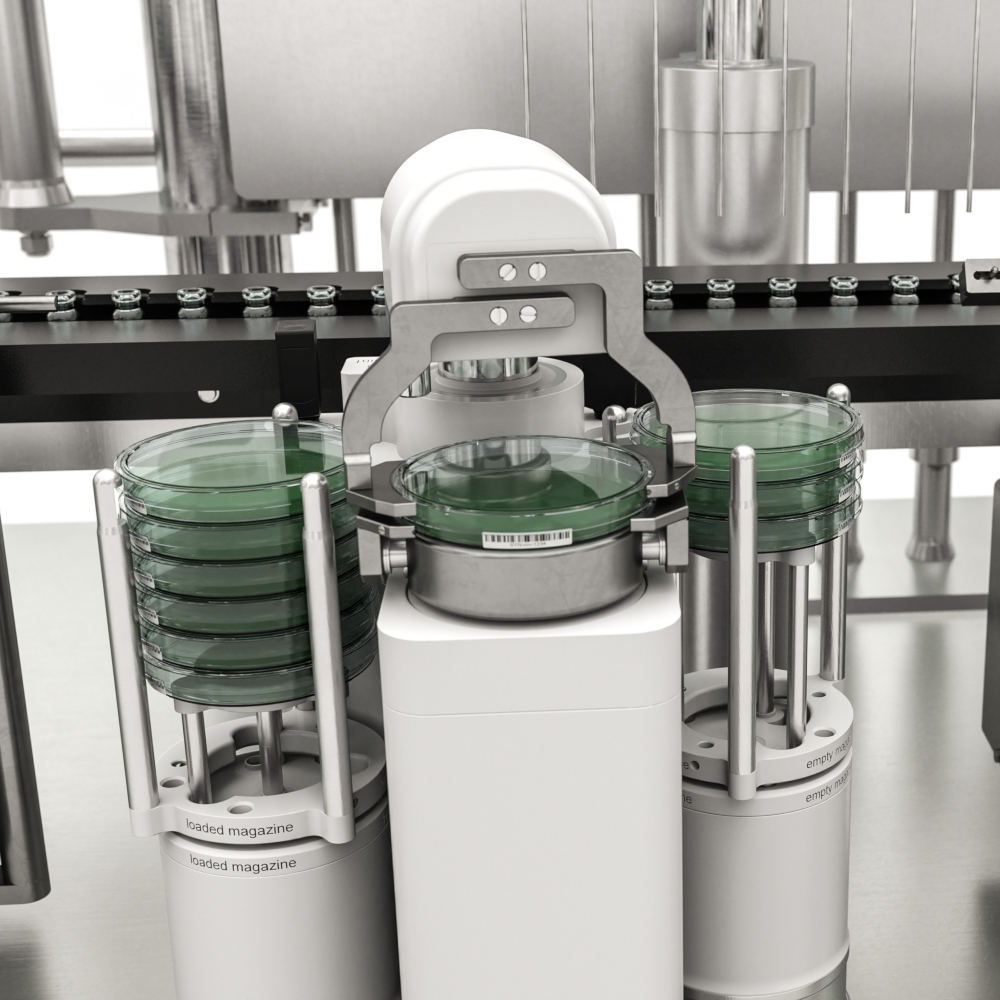
Magazin und Greifer automatisieren den Wechsel der Sedimentationsplatten
Integrationsfähigkeit
Isolatoren und RABS
Auswirkung auf manuelle Eingriffe
Manuelle Eingriffe um 80 % reduziert
Wechselintervall
Mindestens 24-Stunden-Sedimentationsplattenwechselintervall
Einsatzbereich
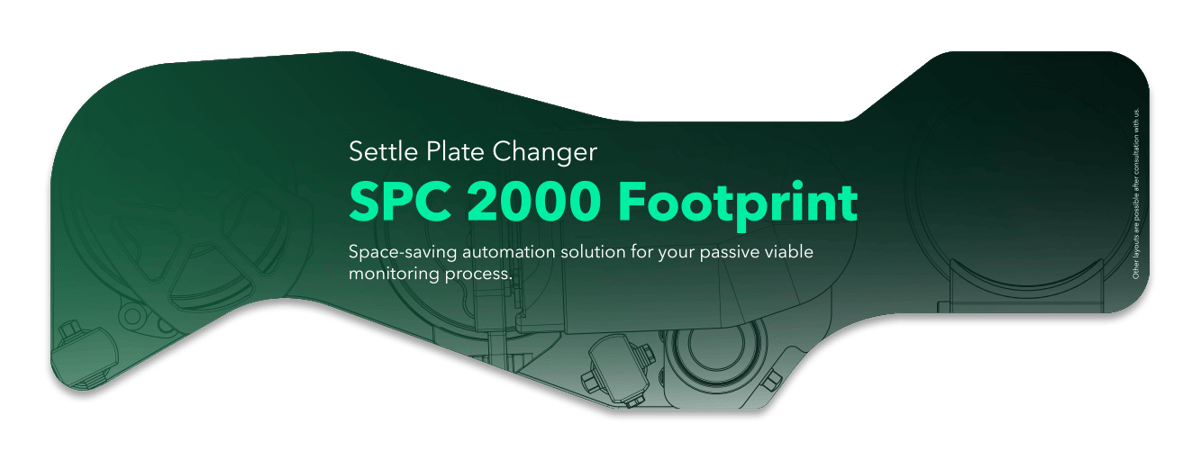
Für Neumaschinen oder zur Nachrüstung aller Marken, Typen und Steuerungen
Daten und Rückverfolgbarkeit
Standardisierte Übertragung der Expositionsdaten, optionales Barcode-Scanning
Vorteile
Am besten geeignet, wenn Sie wollen:
- Passives Keimzahlmonitoring in bestehenden aseptischen Linien automatisieren
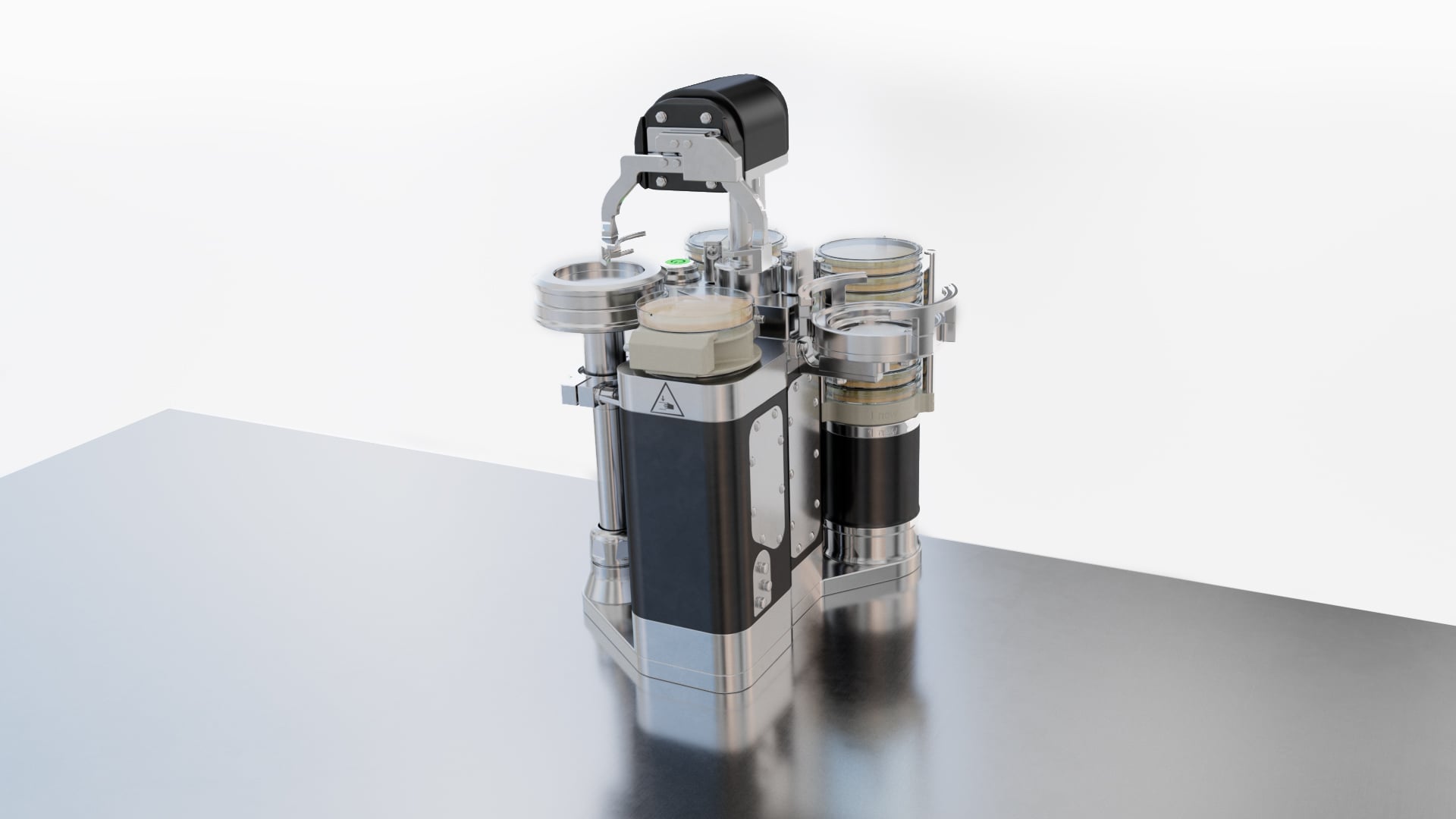
SPC 4000
Monitoring-Modus
Aktives und passives Keimzahlmonitoring
Handling-Konzept
Magazin und Greifer automatisieren die Handhabung der Sedimentationsplatten und des Luftprobenahmekopfs
Integrationsfähigkeit
Isolatoren und RABS
Auswirkung auf manuelle Eingriffe
Manuelle Eingriffe um ca. 95 % reduziert
Wechselintervall
Mindestens 24-Stunden-Sedimentationsplattenwechselintervall
Einsatzbereich
Für Neumaschinen oder zur Nachrüstung aller Marken, Typen und Steuerungen
Daten und Rückverfolgbarkeit
Standardisierte Übertragung der Expositionsdaten, optionales Barcode-Scanning
Vorteile
Am besten geeignet, wenn Sie wollen:
- Aktives und passives Monitoring in einem System kombinieren
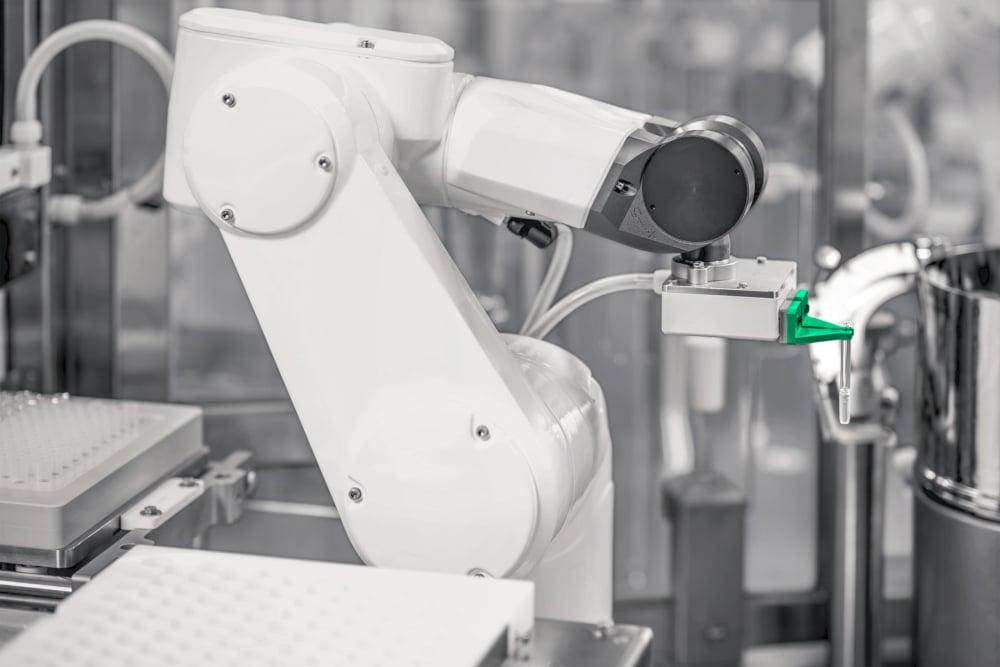
Robotergestützte aktive Luftkeimsammlung
Monitoring-Modus
Aktive Luftkeimsammlung in der Prozesszone
Handling-Konzept
Robotergestützte Positionierung des Luftprobenahmekopfs während der Produktion
Integrationsfähigkeit
Aseptische Produktionsumgebungen
Auswirkung auf manuelle Eingriffe
Reduziert den manuellen Zugriff auf die Prozesszone
Wechselintervall
Durch den Probenahmeplan festgelegt
Einsatzbereich
Abhängig von der Standortkonfiguration
Daten und Rückverfolgbarkeit
Probenahmedaten an übergeordnete Systeme übertragbar
Vorteile
Am besten geeignet, wenn Sie wollen:
- Aktive Luftprobenahme mit robotergestützter Positionierung automatisieren
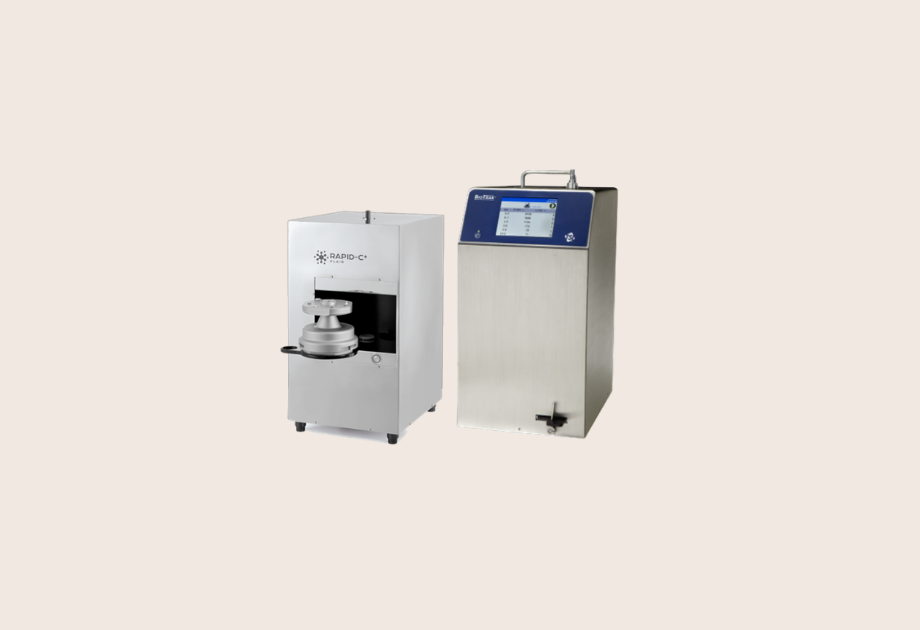
Biofluoreszenz-Partikelzähler
Monitoring-Modus
Echtzeit-Erkennung lebensfähiger und nicht lebensfähiger Partikel
Handling-Konzept
Kontinuierliche Erfassung luftgetragener Partikel ohne Plattenhandhabung
Integrationsfähigkeit
Aseptische Produktionsumgebungen
Auswirkung auf manuelle Eingriffe
Kein routinemäßiger Plattenwechsel erforderlich
Wechselintervall
Kontinuierlicher Betrieb während der Produktion
Einsatzbereich
Abhängig von der Standortkonfiguration
Daten und Rückverfolgbarkeit
Echtzeit-Partikeldaten mit schichtbegleitenden Abweichungssignalen
Vorteile
Am besten geeignet, wenn Sie wollen:
- Abweichungen schichtbegleitend erkennen, ohne auf rückwirkende Plattenauswertungen angewiesen zu sein
https://www.syntegon.com/hubfs/02_downloads/Settle_Plate_Changer_SPC_4000_Brochure_EN%20(1).pdf|settleplate-changer-4000-en
 https://www.syntegon.com/hubfs/02_downloads/Settle_Plate_Changer_SPC_4000_Brochure_EN%20(1).pdf|
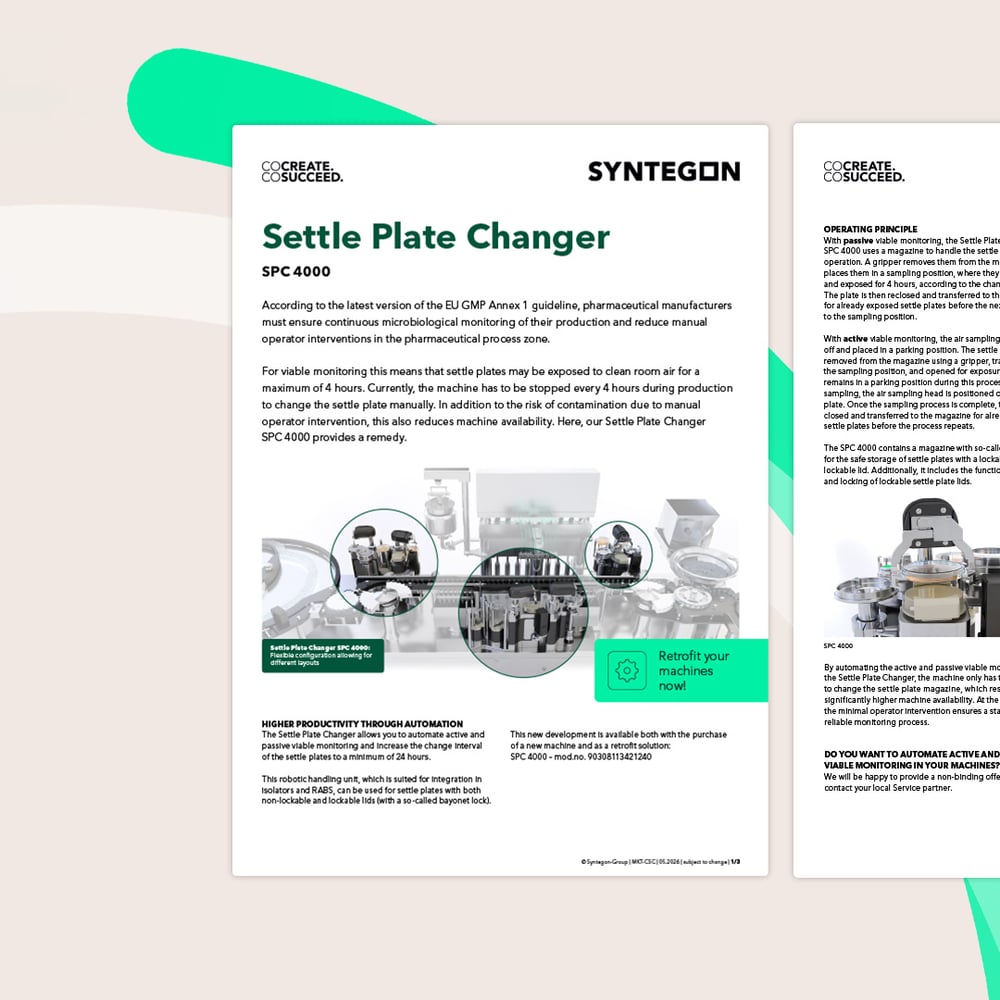
See how SPC 4000 automates plate handling
Environmental monitoring built for longer running production



https://www.syntegon.com/hubfs/02_downloads/20260331_Flyer_Barrier_Systems_DE-1.pdf|new-ci-featureddownload-settleplate
https://www.syntegon.com/hubfs/02_downloads/Settle_Plate_Changer_SPC_4000_Brochure_EN%20(1).pdf|settleplate-changer-4000-en
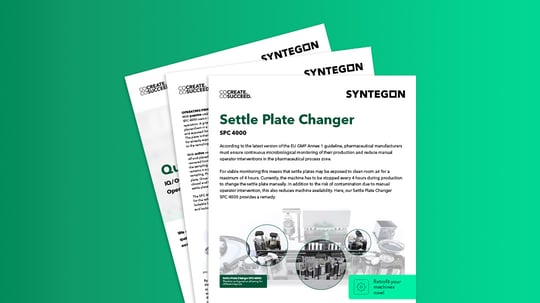
Environmental Monitoring knowledge hub
SPC 2000 flyer
Learn how automated passive EM cuts interventions and improves availability in aseptic lines.
SPC 4000 flyer
See how one system combines active and passive viable monitoring with fewer interventions.

Interested in automating your viable monitoring process through the Settle Plate Changer?
Request a quote.
News

ISPE FOYA Award for our customer Hepalink
Celebrate Hepalink's achievement of the 2026 ISPE FOYA Award for Innovation – Novel Technology. We are proud to support their success as a partner.

PMEC India: shaping pharmaceutical manufacturing
Join Syntegon at PMEC India 2026 to explore integrated technologies and local expertise that enhance safety and efficiency in pharmaceutical manufacturing.
ePSGs for more energy-efficient pure steam
Discover how Georg Carda's ePSG series harmonizes product safety and sustainability in pharmaceutical manufacturing.