
Discover how Georg Carda's ePSG series harmonizes product safety and sustainability in pharmaceutical manufacturing.
Key Takeaways
- Syntegon introduces modular series of electrified pure steam generators with capacities ranging from 50 to 800 kg/h
- Lower emissions due to production free of fossil fuels
- Higher energy efficiency through direct heat transfer with up to 99.3 percent efficiency
- Lower long-term operating costs due to high energy efficiency
Georg, when it comes to energy efficiency, why does Syntegon focus, among other technologies, on the electrification of pure steam generators?
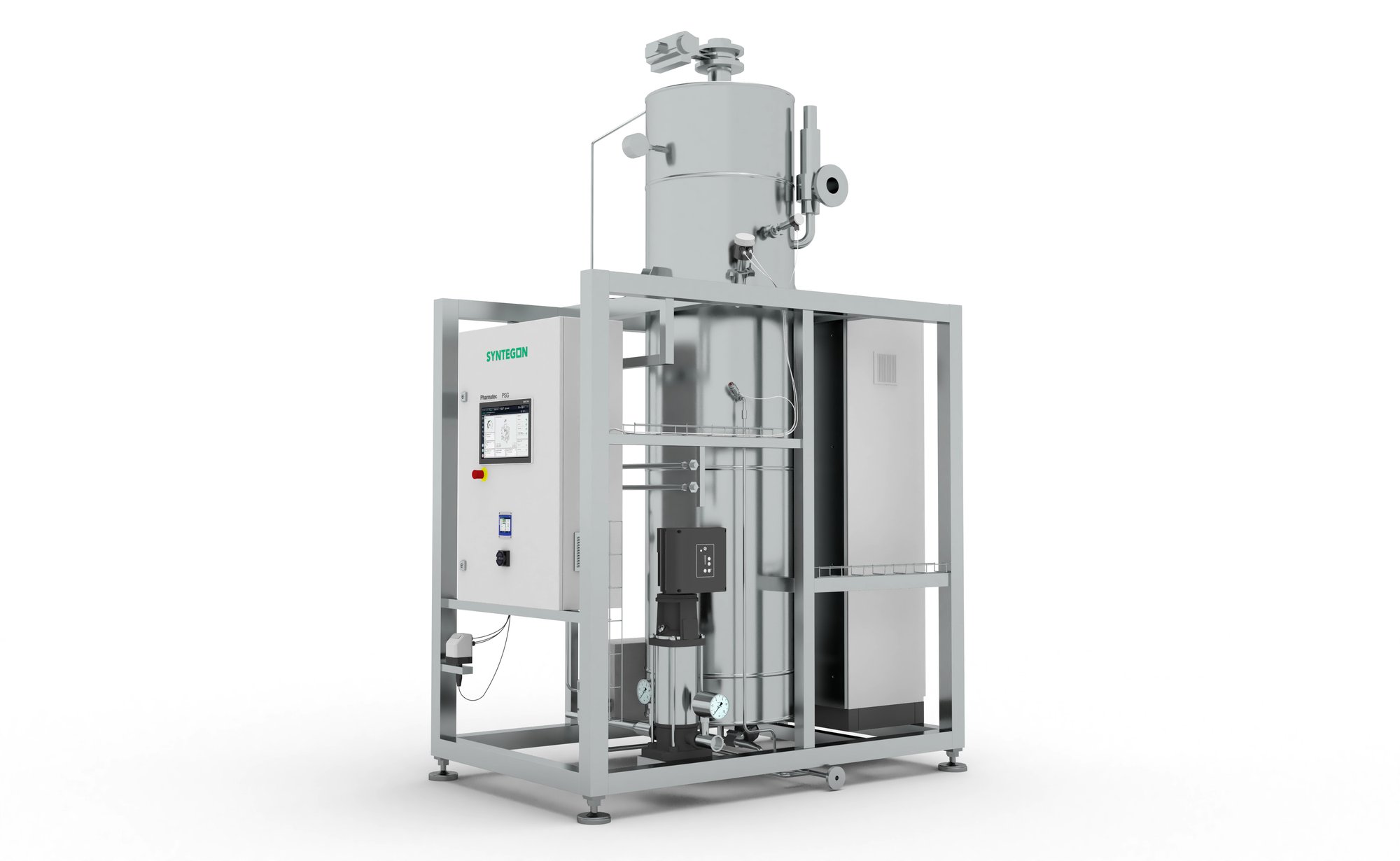
Pure steam generation plays a central role in pharmaceutical manufacturing, for example when cleaning and sterilizing equipment and products during CIP/SIP processes, or during autoclaving. These applications cannot always be replaced by other methods. At the same time, conventional pure steam generation offers significant potential for higher energy efficiency. Typically, fossil fuels – primarily gas – are first used to generate heating steam, which then transfers its energy to the pure steam via a heat exchanger. These additional conversion steps cause energy losses. This is where our electrically heated pure steam generators come into play: Their heating elements convert electrical energy directly into thermal energy and transfer it to the water without an additional transfer medium. This enables us to achieve an efficiency of up to 99.3 percent.
Syntegon’s standardized series of electrically heated pure steam generators covers capacities ranging from 50 to 800 kilograms of pure steam per hour. Additionally, customized solutions tailored to individual requirements are available.
How does this benefit pharmaceutical manufacturers and CDMOs?
First of all, emissions can be directly reduced, as fossil fuels are no longer necessary for generating pure stream. Of course, the electricity used must also be generated. But since the amount of renewable energy used in many power grids around the world is increasing, electrified processes also achieve an improved emissions balance. Furthermore, direct heat transfer increases efficiency. This helps pharmaceutical manufacturers and CDMOs consistently pursue their own sustainability goals, meet regulatory requirements, and become more favorable for customers aiming to decarbonize their supply chains.
The greatest economic advantage comes with the interplay between the high efficiency of the electrified process on the one hand and high gas prices on the other. Operating costs are generally significantly lower in the long term than with conventional pure steam generators, even with fluctuating electricity costs. At the same time, heating steam boilers or additional infrastructure such as piping and valves are no longer required. This reduces maintenance efforts and eliminates the need for certification of the heating steam boiler. Another major advantage: The available heating steam pressure does not limit the achievable pure steam pressure, meaning that different pressures can be flexibly achieved with nearly the same electrical power rating.
Syntegon ePSG – your benefits at a glance
- Lower CO2 footprint
- Higher energy efficiency
- Lower long-term operating costs
- Flexibly adjustable steam pressure
Are there also limiting factors when it comes to electrification?
Yes, especially at existing production sites, infrastructure requirements must first be assessed. Electrified pure steam generators are initially more expensive to purchase than conventional systems. In addition, the required electrical infrastructure needs to either be in place or expanded accordingly. High-capacity ePSGs require a correspondingly high power connection, which existing industrial connections generally cannot provide. Expanding this infrastructure involves additional effort and investments. We therefore always consider the specific area of application and existing site conditions to assess whether and to what extent electrification is a viable option.
For which applications are ePSGs particularly worthwhile?
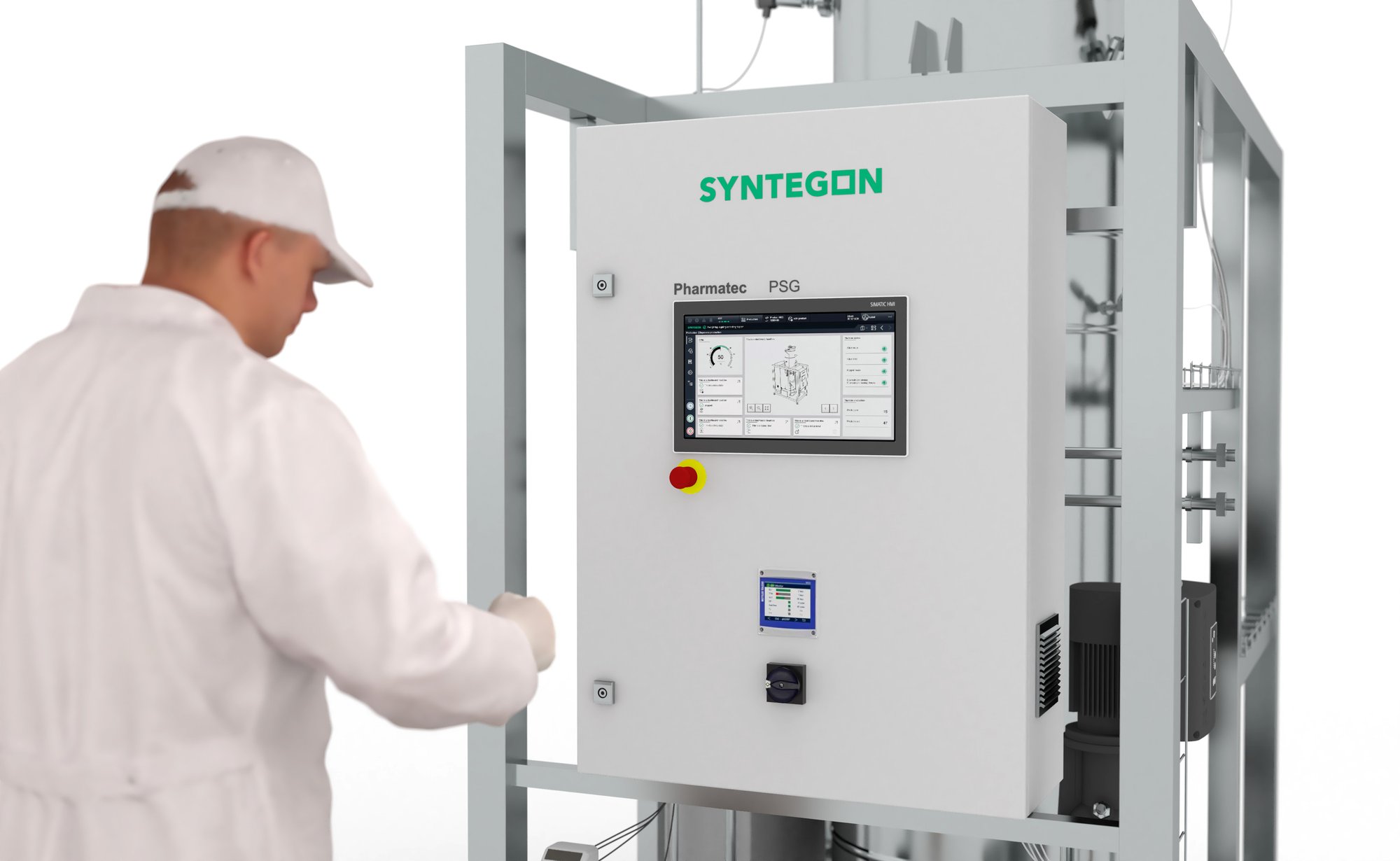
Electrified pure steam generators are particularly suitable for greenfield projects. They allow the necessary electrical capacity and associated infrastructure, including control and power systems, to be incorporated into the initial planning stage, even for lager installations. The systems are also well-suited for applications with lower pure steam requirements. In these cases, a single control cabinet is often sufficient, saving significant space and requiring no increased power capacity. ePSGs are particularly worthwhile for companies that generate all or part of their electricity with renewable sources, such as photovoltaic systems. This greatly reduces emissions during pure steam generation.
Are there any further pharmaceutical manufacturing processes that offer potential for electrification?
We see particularly great potential in the distillation-based generation of water for injection. Distillation processes are well suited for electrification because they allow electrical energy to be efficiently converted into process heat. This way, large volumes of water can be heated reliably and safely with a comparatively moderate amount of electricity. This is why our next development project is the electrification of WFI distillation systems. Our aim is to offer pharmaceutical manufacturers further opportunities to make their energy-intensive pure media processes more efficient and, in the long term, to lower their emissions.
Syntegon Newsletter
Get inspired with regular updates on technologies and services, case studies, webinar offers and events.