
Discover why granulation approaches matter in OSD production, how they impact tablet quality, and which technology best fits your manufacturing needs.

Key Takeaways
- Granulation improves flowability, uniformity, and process robustness, enabling reliable oral solid dosage (OSD) manufacturing.
- High-shear, fluid bed and continuous granulation each offer distinct advantages depending on the API, formulation, and production strategy.
- Successful granulation goes beyond technology selection, combining process expertise, scalable solutions and lifecycle support.
Before a tablet or capsule reaches patients, manufacturers face a challenge that is invisible to most: handling powders. Powder blends are inherently difficult to process. They can segregate during transport, show inaccuracies in dosing, generate dust that risks operator health, show inconsistent flow behavior or vary in compressibility. This matters because even minor deviations can affect manufacturing processes, increase product losses, or complicate the scale-up from development to commercial manufacturing.
At the same time, pharmaceutical formulations continue to evolve. More complex active ingredients, growing quality requirements and increasing pressure to accelerate time-to-market demand manufacturing processes that are both reliable and reproducible. Granulation therefore lays the foundation for robust production by transforming fine powders into homogeneous granules with consistent properties.
Granulation creates value throughout the manufacturing process
The benefits can be seen throughout the production process. Improved flowability allows materials to move reliably through downstream equipment, reducing process interruptions due to, for example, clogging. At the same time, more homogeneous granules promote consistent API distribution, helping manufacturers achieve uniform dosage and reliable product quality. Better compressibility of the powder further contributes to a stable tablet production, while reduced dust formation minimizes product losses and also ensures a safer working environment for operators, particularly during capsule filling. Together, these improvements increase process reliability, enhance efficiency and help manufacturers achieve more predictable and reproducible production outcomes. These advantages extend beyond day-to-day manufacturing:
“Well-designed granulation processes simplify the scale-up from lab development to commercial production and facilitate technology transfer. By enabling reproducible processes and consistent product quality, granulation helps our customers to improve their operational efficiency – and reduces manufacturing risks at the same time.”
Fritz-Martin Scholz, Global Product Manager at Syntegon
Different technologies for different manufacturing goals
Although the goal of granulation remains the same, there is no single technology that suits every formulation. Different products place different demands on the manufacturing process, making technology selection an important part of process development.
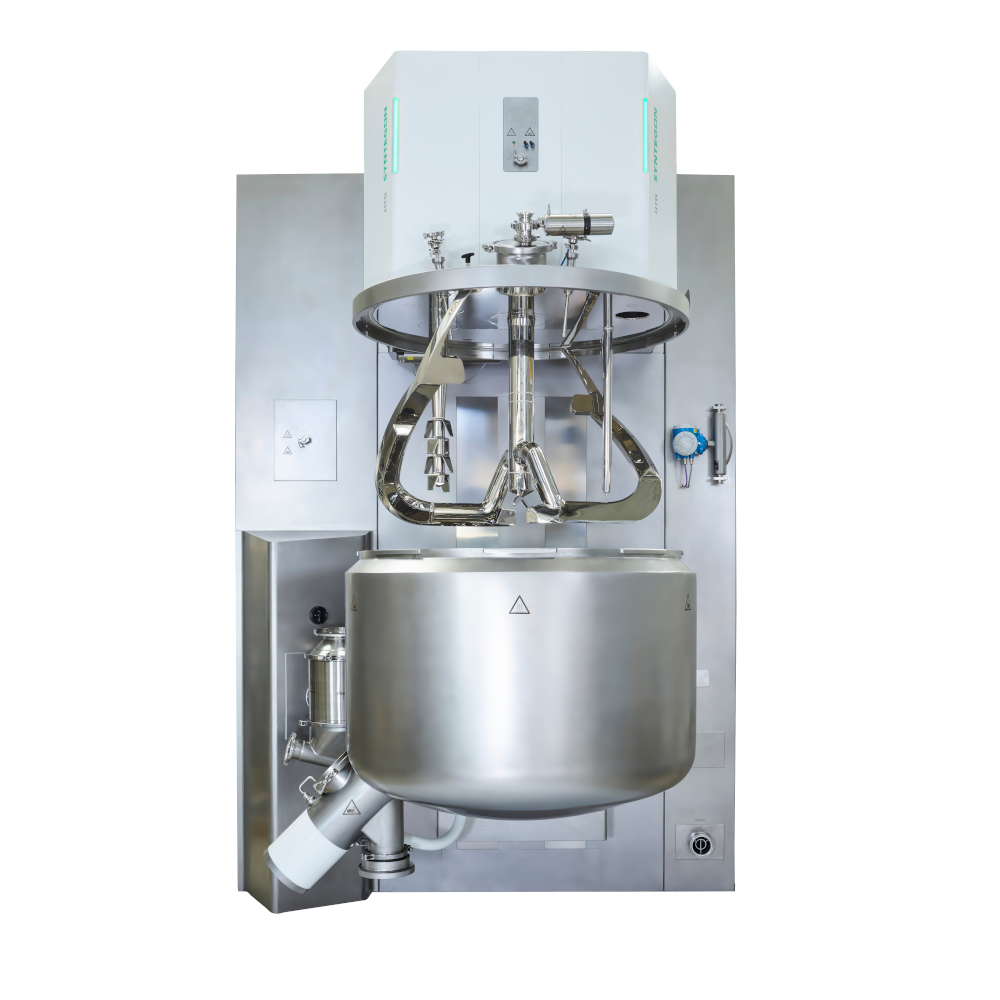
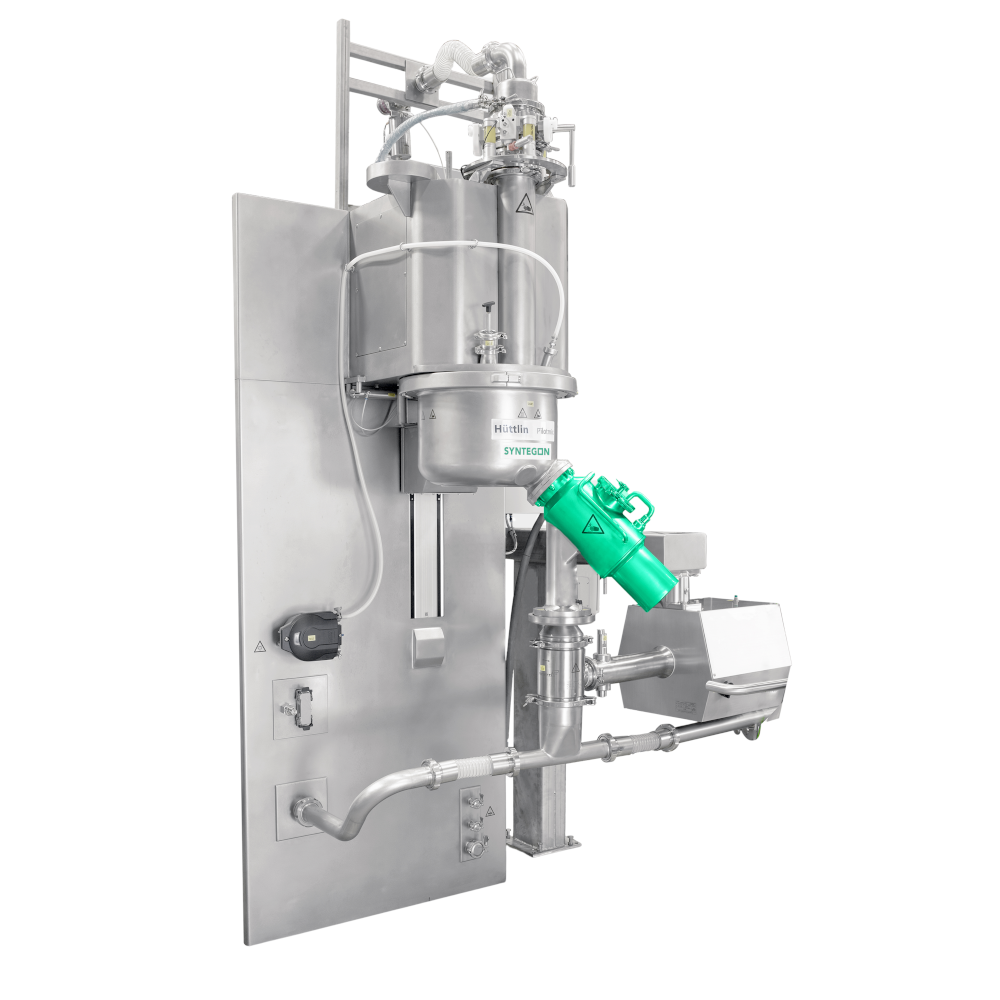
One of the most established technologies is high-shear granulation. Here, powders are intensively mixed while a binder solution is added, producing compact granules with excellent flow and compression characteristics. The process offers a high degree of control over granule formation and is ideally suited for formulations that require robust granule properties and consistent quality. While not suitable for some shear-sensitive raw materials, its versatility has made high-shear granulation a well-established technology for a wide range of pharmaceutical applications, from development to commercial manufacturing.
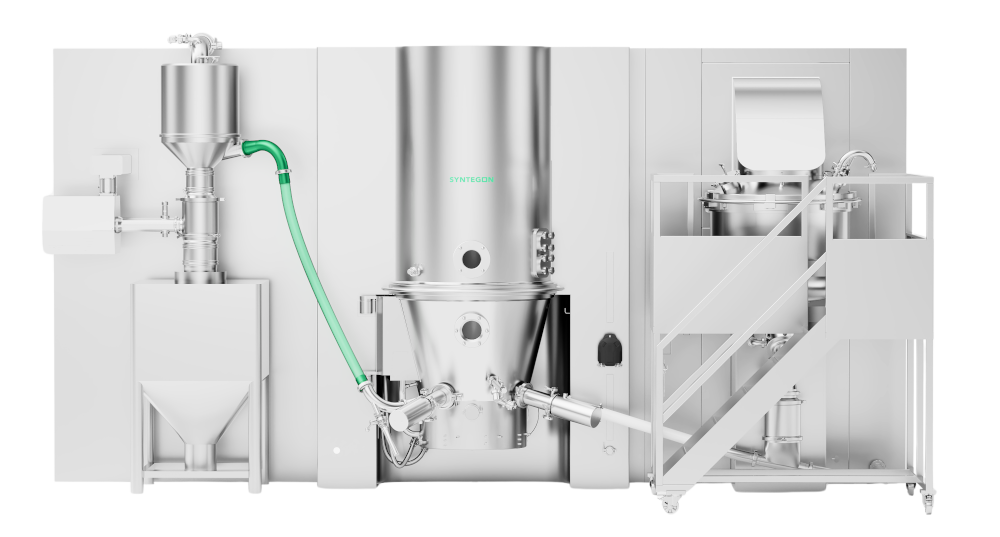
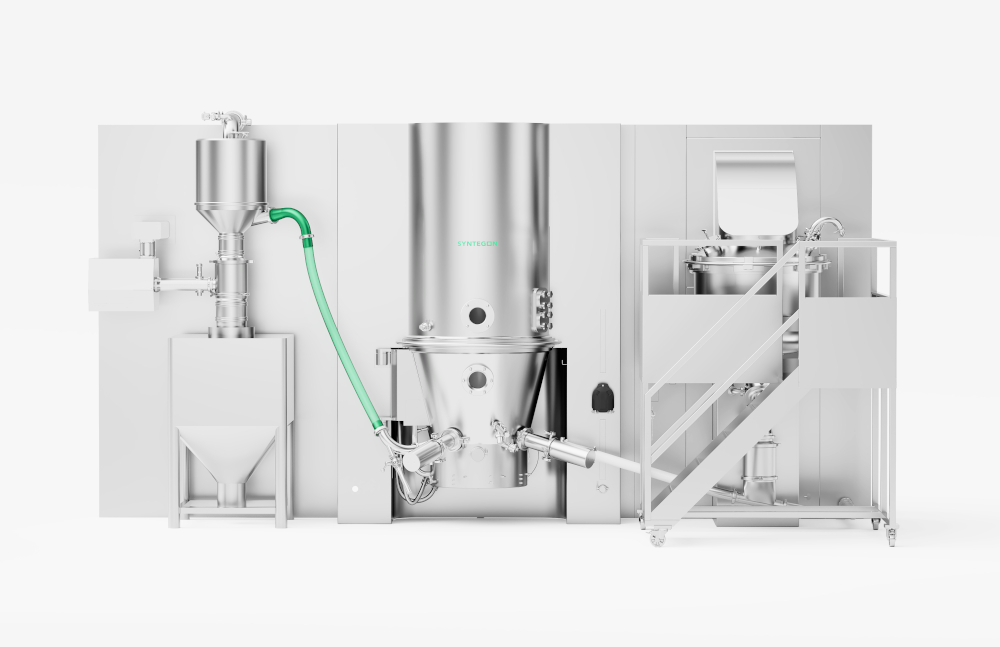
Another widely used technology is fluid bed granulation. In this process, powders are kept in motion by a controlled stream of process air while a binder solution is sprayed onto the particles, allowing granules to form and dry under carefully controlled conditions. One of its key advantages is the ability to combine multiple process steps within a single system. Depending on the configuration, manufacturers can use fluid bed technology not only for granulation, but also for drying and coating. This makes fluid bed technology particularly well suited for manufacturers seeking a flexible platform that can support different process requirements within a single system, while reducing process complexity, minimizing product handling and supporting efficient manufacturing.
Another benefit of fluid bed granulation is its suitability for continuous granulation, which offers an alternative to traditional batch manufacturing. Raw materials are continuously fed through the process, producing granules without interruption. This creates consistent product quality, more efficient resource usage and high process stability. As manufacturers strive for higher productivity and integrated production concepts, continuous granulation is becoming an increasingly attractive option for high-volume production.
Ultimately, there is no one-size-fits-all approach to granulation. The right technology depends on the formulation, production objectives, and long-term manufacturing strategy. Understanding the strengths of each approach is therefore essential for selecting the granulation process that best supports a specific application.
One partner. Seamless solutions for granulation.
Selecting the right technology, however, is only part of the equation. Successful granulation also requires process expertise, reliable scale-up, seamless tech transfer and long-term lifecycle support. As manufacturing requirements continue to evolve, pharmaceutical companies increasingly seek partners who can support every stage of the process rather than supplying individual pieces of equipment.
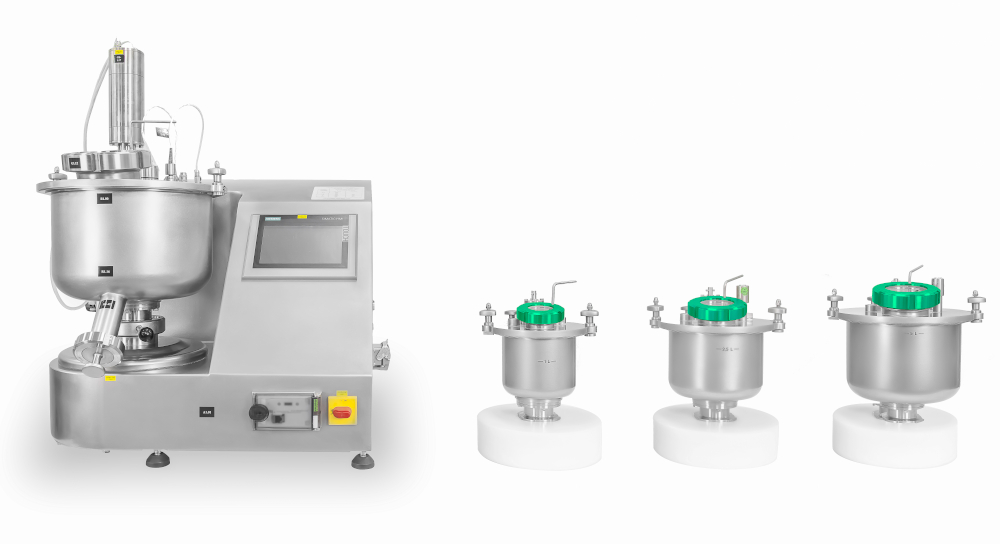
With decades of experience, Syntegon combines process know-how with an integrated granulation portfolio spanning R&D equipment, high-shear mixers, fluid bed systems, continuous manufacturing solutions, and lifecycle services. Rather than viewing these as stand-alone technologies, Syntegon connects them into one seamless process – from formulation development and process optimization to commercial manufacturing and long-term operational support.
If you would like to learn more about individual granulation technologies and their applications, explore our related blog articles or contact our experts.
Syntegon Newsletter
Get inspired with regular updates on technologies and services, case studies, webinar offers and events.