Antibody drug conjugate manufacturing
High-potency ADC fill-finish leaves little room for error: every intervention can increase operator exposure risk, product loss, and overall process complexity.
Antibody drug conjugate manufacturing under growing pressure
ADC manufacturing is under growing pressure from containment requirements, product loss, and increasing process complexity. As your strategic lifecycle partner, Syntegon brings integrated fill-finish expertise to reduce risk and help translate process requirements into the right line concept.
Containment, yield, and complexity under control
How to contain high-potent ADC operations
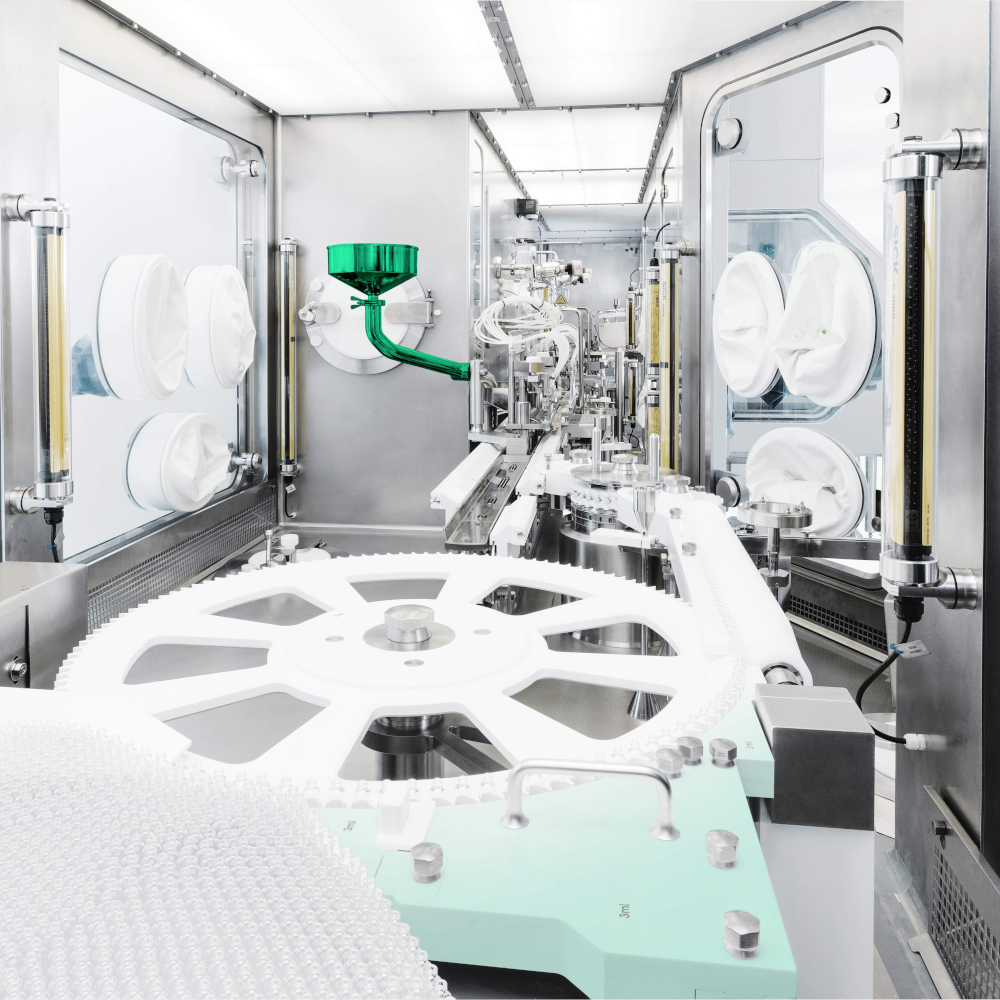
Exposure risk increases when high-potent products move through multiple process steps and manual interventions. Syntegon combines integrated fill-finish and containment expertise to reduce interaction points and strengthen line-level control.
- Isolator-based concepts reduce open handling in critical zones
- Integrated line design limits weak points between process steps
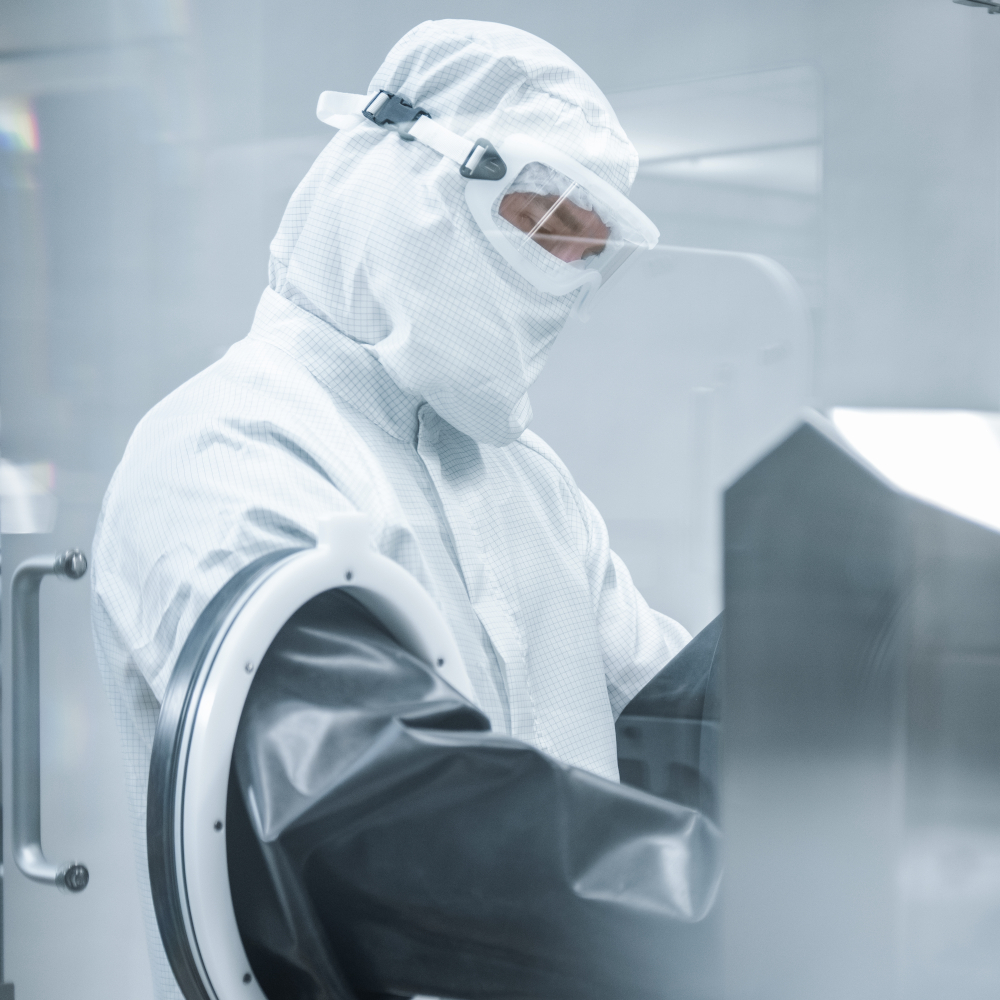
- Glove integrity testing and barrier strategies help reduce daily operational risks
How to reduce product loss in ADC fill-finish
ADC fill-finish leaves little room for loss because product value is high and handling conditions are demanding. Syntegon applies process know-how in gentle transfer, controlled filling, and in-process checks to help protect yield across the full line concept.
- Gentle handling reduces stress on sensitive product
- 100% IPC concepts improve fill control, traceability and process visibility
- Integrated lyophilization concepts support stable downstream processing
How to simplify ADC manufacturing decisions
ADC manufacturing becomes more complex when containment, lyophilization, cleanability, and qualification must work together.
Syntegon combines consulting, line design expertise, and lifecycle support to clarify trade-offs early and move projects forward with less coordination effort.
- End-to-end line concepts connect formulation, filling, freeze-drying, and capping
- Different layout options can be adapted to site and process requirements
- Cleanability and qualification considerations are built into the design phase
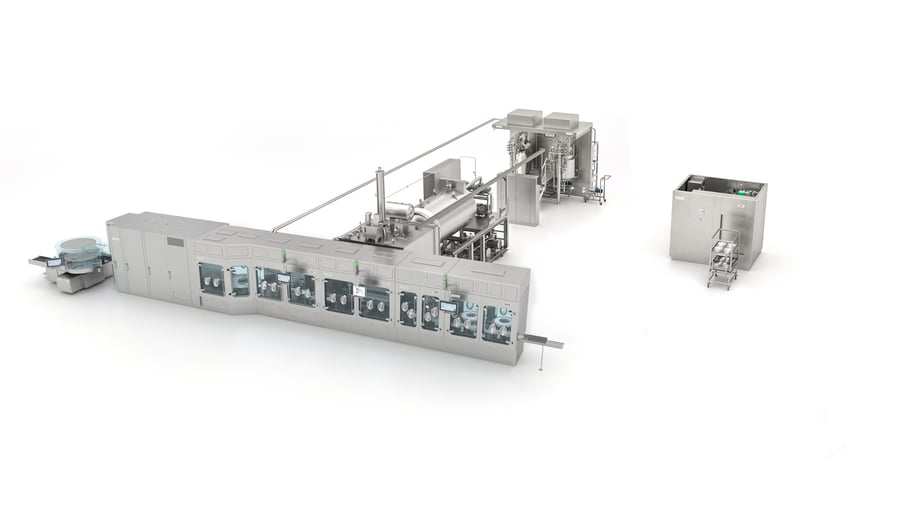
Line Overview – Antibody drug conjugate manufacturing
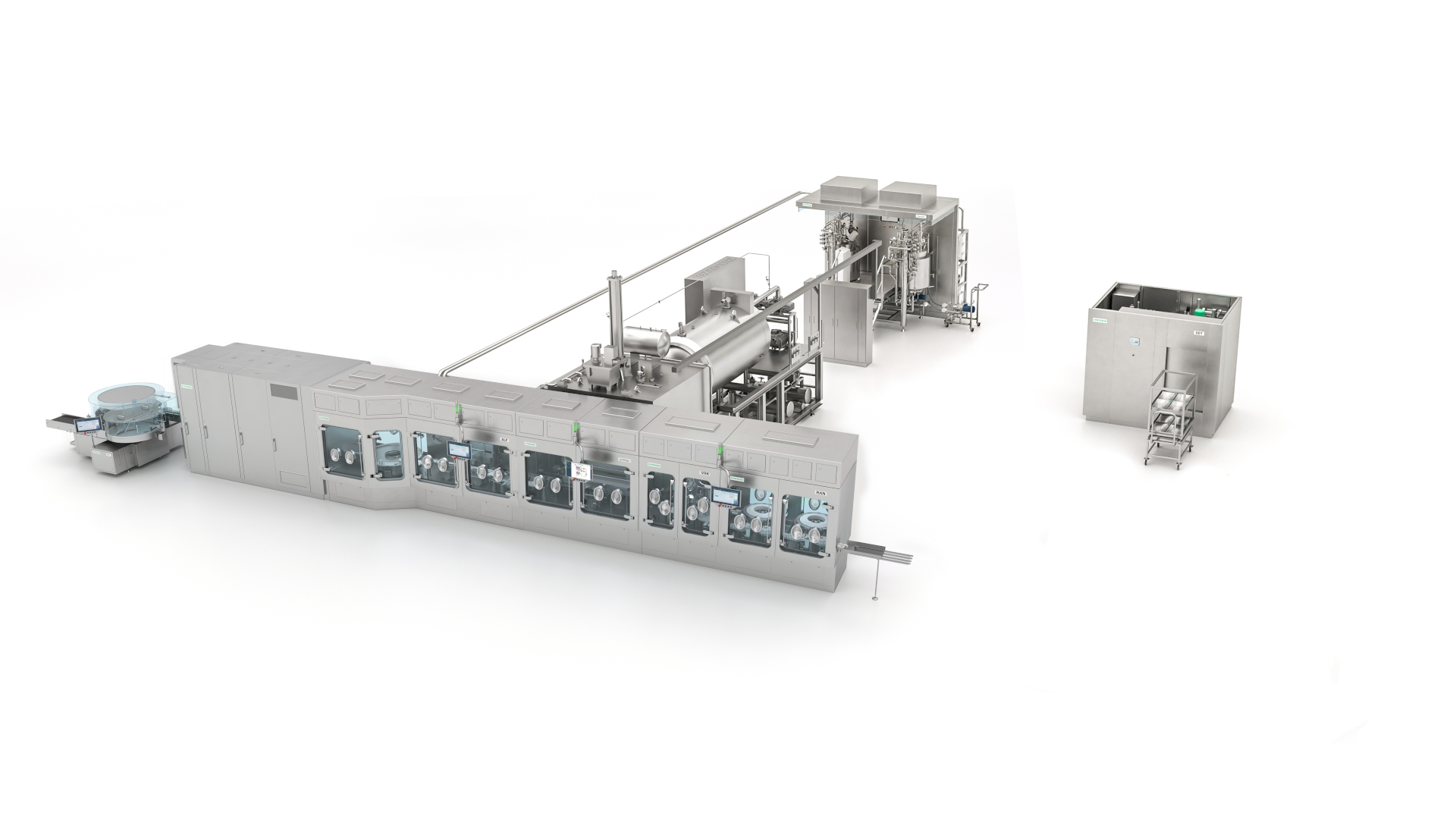
Formulation and pure media
Set stable process conditions early to protect sensitive product and prepare reliable downstream filling.
Container pretreatment
Prepare containers for aseptic processing to reduce contamination risk before product enters the line.
Filling and closing
Fill and close under contained conditions to protect yield, limit intervention, and keep the process controlled.
Freeze drying
Integrate lyophilization to protect product stability and reduce complexity between critical process steps.
Isolator
Create a closed barrier around critical zones to reduce exposure risk and limit manual interaction.
External washing
Remove residual contaminants from container surfaces after filling to protect batch integrity ahead of the next process step.
Sterilization
Build sterilization into the line concept to support clean operations and robust process readiness.
Formulation and pure media
Set stable process conditions early to protect sensitive product and prepare reliable downstream filling.
Container pretreatment
Prepare containers for aseptic processing to reduce contamination risk before product enters the line.
Filling and closing
Fill and close under contained conditions to protect yield, limit intervention, and keep the process controlled.
Freeze drying
Integrate lyophilization to protect product stability and reduce complexity between critical process steps.
Isolator
Create a closed barrier around critical zones to reduce exposure risk and limit manual interaction.
External washing
Remove residual contaminants from container surfaces after filling to protect batch integrity ahead of the next process step.
Sterilization
Build sterilization into the line concept to support clean operations and robust process readiness.
Explore the complete line
ADC GMP manufacturing with greater line control
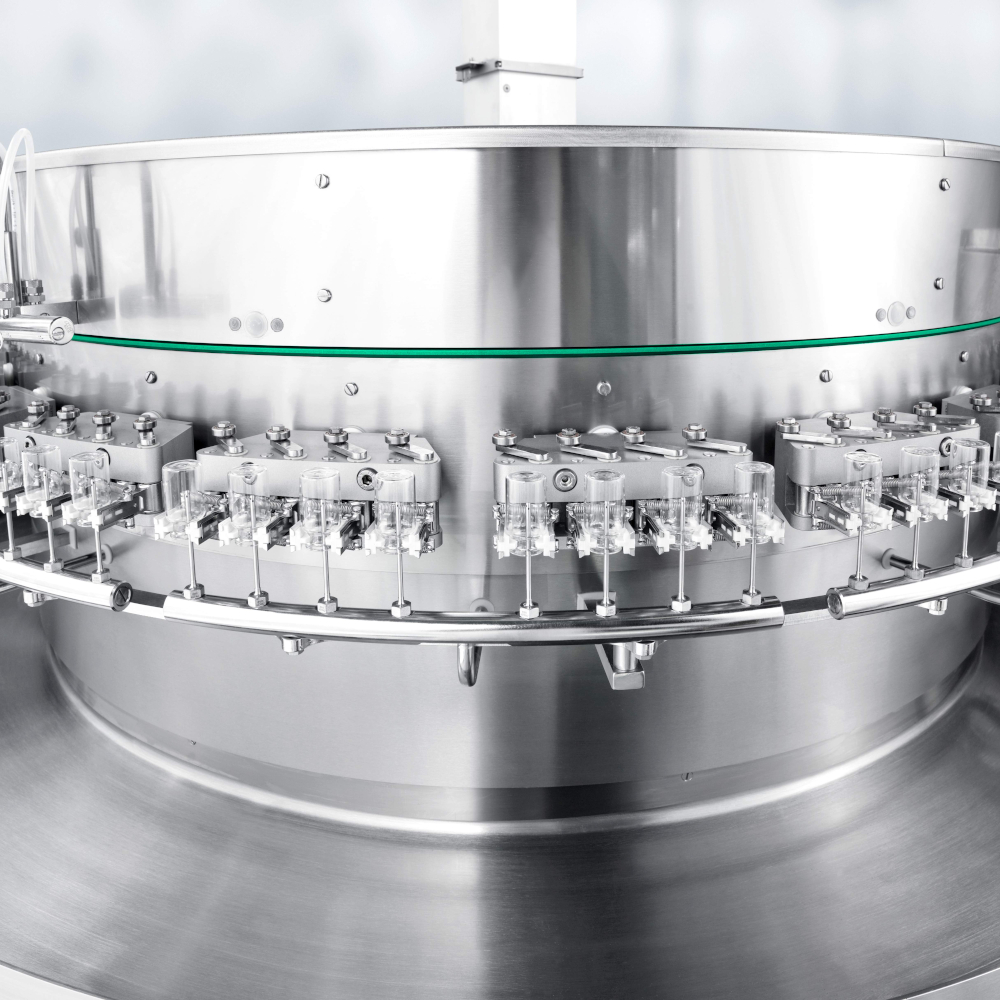
Confident changeover between high-potent products
Facilities running multiple ADC or high-potent products face a distinct risk at every campaign changeover: residual product carryover. Syntegon's line design supports structured cleaning and changeover concepts that reduce cross-contamination risk between products, without adding unnecessary downtime between campaigns.
- Defined cleaning and changeover concepts for multi-product operations
- Reduced cross-contamination risk between campaigns
- Faster, more predictable transitions between different ADC products
Clean containers leaving the containment zone
Even with strong internal containment, filled and closed containers can carry surface-level product residue as they exit the containment zone. Syntegon integrates outside vial washing into the line concept, so containers leave clean and ready for downstream handling – protecting personnel and equipment beyond the isolator itself.
- Removes surface contamination from filled, capped containers
- Protects personnel handling containers after they leave containment
- Reduces contamination risk for downstream equipment and packaging
Digital monitoring and documentation built into the line
Regulatory scrutiny of ADC GMP manufacturing continues to increase, and audit readiness depends on more than clean processes – it depends on accessible, reliable data. Syntegon integrates environmental and process monitoring into the line concept, creating a continuous data trail that supports batch documentation and inspection readiness without adding manual reporting effort.
- Continuous environmental and process monitoring across critical zones
- Automated data capture reduces manual documentation effort
- Clear audit trail supports inspection and batch release readiness
Frequently asked questions
Antibody drug conjugate manufacturing combines biologic sensitivity with high-potency handling. Teams must protect product quality while controlling operator exposure, contamination risk, and product loss. The process also places more pressure on containment, gentle handling, line integration, and qualification planning. That is why ADC manufacturing decisions often go beyond a single machine and require a line-level view.
The most critical steps in the antibody drug conjugate manufacturing process depend on the product and process strategy, but the main areas often include formulation and pure media, vial pretreatment, filling and closing, freeze drying, isolator design, inspection, and sterilization. Each step affects the next. In ADC manufacturing, the interfaces between these steps matter as much as the steps themselves because they can increase risk, complexity, and product loss.
Most ADCs involve highly potent substances that demand strict control during fill-finish. Containment reduces the risk of operator exposure and limits open handling in critical zones. It also supports more stable processing by reducing manual interaction. In practice, containment needs to work across the line, not only at one machine, because transfers and interfaces can create additional risk points.
Product loss is a major concern because ADCs are high value and often sensitive to handling conditions. Manufacturers can reduce loss by designing for gentle product transfer, controlled filling, fewer interventions, and reliable in-process control. Early decisions on line integration also matter. When filling, lyophilization, and downstream handling are planned together, teams can reduce weak points that put yield at risk.
Lyophilization should be considered when product stability and shelf life require it. For ADCs, that decision affects more than the drying step itself. It also shapes line layout, transport, containment, and interface design. Evaluating lyophilization early helps teams avoid downstream complexity and make better decisions on how filling and freeze drying will work together in the final line concept.
Line integration matters because ADC manufacturing risk often sits at the interfaces between process steps. If formulation, filling, freeze drying, capping, inspection, and cleaning are planned separately, coordination effort and qualification complexity can rise quickly. An integrated approach creates a clearer path for containment, product flow, and process control. It also helps teams reduce avoidable handoffs and make earlier, better design decisions.
Facility layout shapes material flow, personnel movement, containment strategy, and line accessibility. In ADC manufacturing, those decisions can affect both daily operations and long-term scalability. Layout concepts need to support safe handling, efficient transfers, and clean integration of critical equipment. If the layout does not match the process concept, teams can face more interventions, more coordination effort, and more difficulty during qualification and routine production.
The main ADC manufacturing challenges when scaling from clinical to commercial production include containment, process consistency, and line robustness. A setup that works for small batches may not translate cleanly to commercial output, especially if product handling, inspection, or lyophilization are not aligned early. Teams also need to manage qualification, facility fit, and future flexibility. Planning these factors early can reduce redesign work and support a smoother path to commercial production.
Interested in Visual inspection machines and solutions?
Let’s get in touch to discuss your visual inspection requirements.
News
Join us at the PDA Universe of Pre-Filled Syringes Conference in Palm Springs to explore innovative production strategies for clinical trials and small batches.
RTU packaging for syringes, vials, and cartridges requires precise interaction between container and machine. Discover key challenges and solutions.
Discover Syntegon’s seamless pharma solutions at PACK EXPO 2026 in Chicago – from vial fill-finish and Annex 1 compliance to flexible OSD production.
Syntegon Newsletter
Get inspired with regular updates on technologies and services, case studies, webinar offers and events.