Discover Syntegon’s MaxPro features: smart automated weighing and dosing functions that reduce product loss and improve pharmaceutical filling accuracy.
Key Takeaways
- Product losses can occur during start-up, filling, and batch completion
- MaxPro combines four smart functions to improve filling accuracy and product yield
- Automated weighing and re-dosing help reduce underfilled containers as well as unnecessary rejects
- MaxPro functions can be integrated with many different filling systems
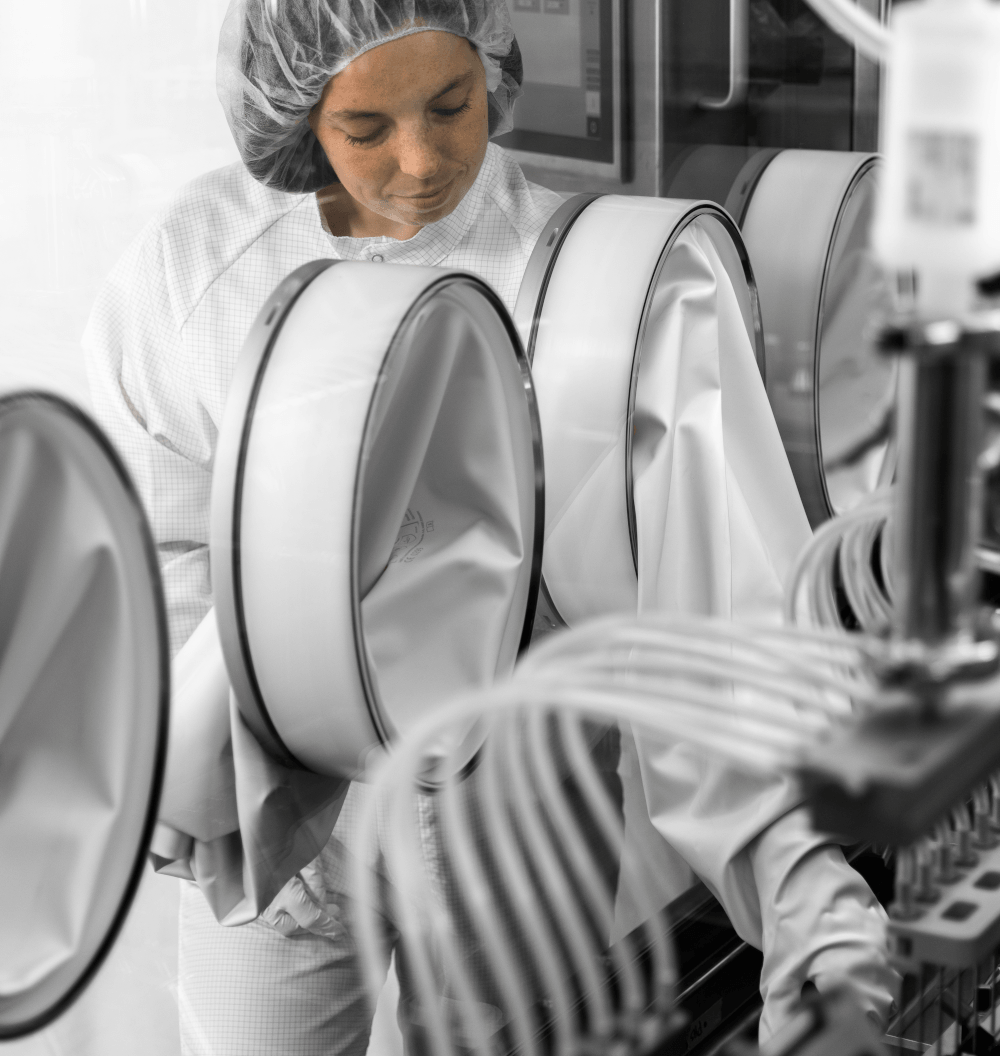
For pharmaceutical manufacturers and CDMOs, making the most of valuable products is becoming increasingly important. High-value medicines such as antibody-drug conjugates (ADCs) and blood plasma derivatives require careful handling and precise filling. Even small product losses can have a significant impact on manufacturing costs and the amount of medicine available for patients. Yet product yield depends on more than the accuracy of the filling system itself.
Product can be lost when containers are underfilled or rejected, and when residual product remains in the system at the end of a batch. Automated process control therefore plays an important role alongside the choice of an appropriate filling system. Our optional MaxPro features address these challenges at different stages of the filling process. Offering automated weighing, precise dosing, and intelligent correction functions, they help manufacturers make better use of valuable product.
MaxPro portfolio at a glance
- Dose-In/Dose-Out: reduces product losses during start-up and batch completion
- Twin-Fill: improves filling accuracy through two-stage dosing and weighing
- Redose on Request: automatically detects and corrects underfilled containers
- Run Empty to One Container (RETOC): consolidates residual product from multiple filling stations into a single container
Dose-In/Dose-Out: making every filling count
Product loss often begins before regular production starts. Air must be removed from the filling system, and individual filling stations need to be adjusted to achieve the required fill weight. Conventional start-up procedures can produce underfilled containers. Dose-In addresses this challenge through a controlled, automated start-up process. First, the system performs de-aeration directly on the weighing scale. It then gradually approaches the target fill weight through precise micro-dosing while determining the correction values required for stable production.
At the end of the batch, Dose-Out takes over. Once the intermediate product tank reaches its minimum level, the system switches to a controlled emptying process. Each filling station is emptied using the scale and automatically deactivated when no product remains. This allows manufacturers to utilize residual product while maintaining filling tolerances, with as little as one underfilled container per filling station.
Twin-Fill: higher accuracy in two steps
Systematic underfilling can account for a considerable share of product loss. To ensure that every container meets the specified minimum fill quantity, manufacturers may need to dose more product than strictly required. For high-value medicines, even small excess volumes can add up across a batch. Twin-Fill helps reduce these losses by dividing the filling process into two stages.
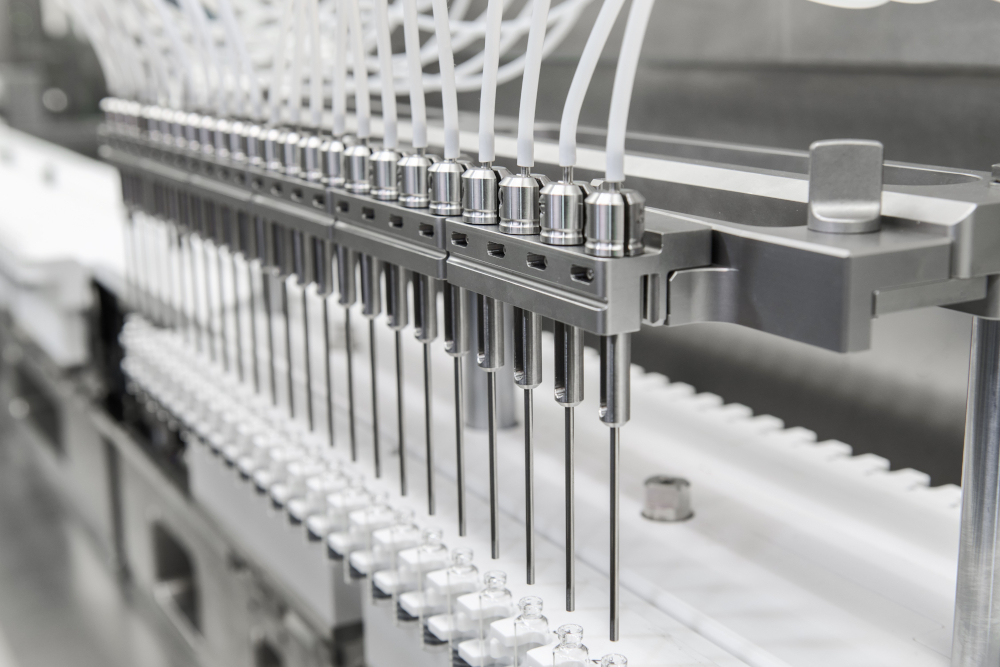
Approximately 95 percent of the target volume is dosed first, followed by an intermediate weight check. A second, more precise filling step then adds the remaining quantity, typically around five percent, based on the measured weight. Three weighing stations enable 100 percent in-process control (IPC) of the containers throughout the sequence. By limiting the final dosing step to a small volume, Twin-Fill supports tighter filling tolerances while combining fast initial filling with accurate final dosing.
Redose on Request: correcting underfilled containers
Even with precisely controlled filling processes, individual containers may occasionally fall below the specified minimum fill quantity. Rejecting these containers would mean losing both the product and the packaging material. Redose on Request (RoR) offers an automated alternative.
When the weighing station identifies an underfilled container, the transport system stops and the filling needles move into position above the affected container. The system then adds the missing product until the required target weight is reached before production resumes. This targeted correction helps reduce unnecessary rejects without manual intervention.
RETOC: using residual product at batch completion
Even after regular production ends, valuable product may remain in individual filling stations. If these residual quantities cannot be dosed accurately, they may have to be discarded. Run Empty to One Container (RETOC) takes a different approach to batch completion. When the intermediate tank reaches its minimum level, the filling needle bar moves the individual needles sequentially over a container positioned on the weighing scale.
The remaining product from the filling stations is dosed into this container until the target weight is reached. The process continues until the filling stations have been emptied. Ideally, only the final container remains partially filled. By consolidating residual quantities rather than producing separate underfilled containers at each filling station, RETOC helps manufacturers recover more usable product.
Your benefits at a glance
- More correctly filled containers from the available product
- Fewer rejects, less underfilling, and improved use of residual quantities
- Automated weighing and precise dosing corrections
- Automated start-up, re-dosing, and emptying processes
- Optional features for different filling systems and production requirements
Making product yield part of the filling strategy
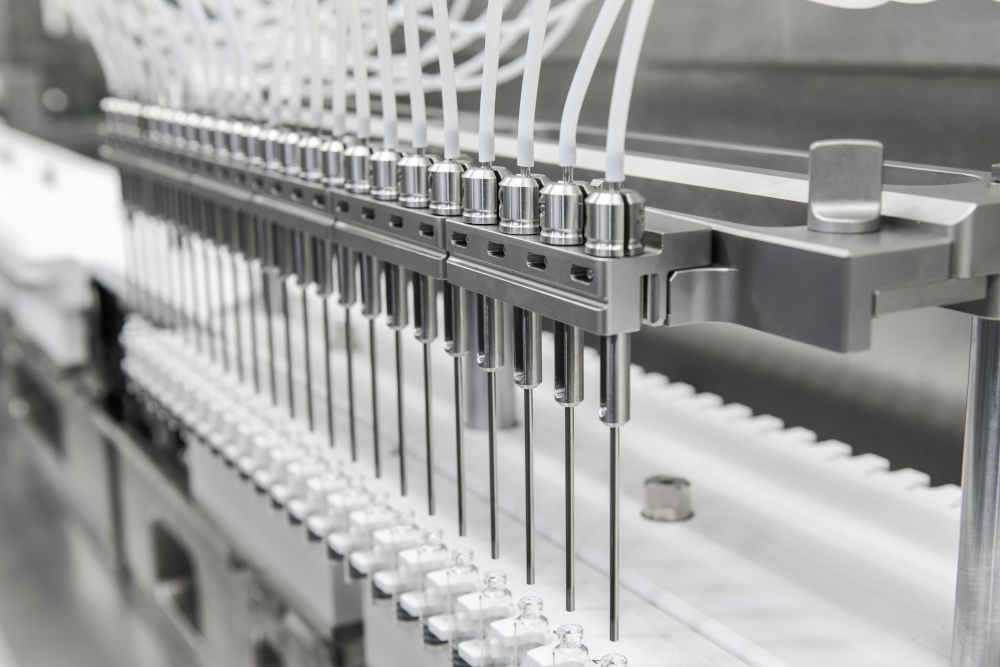
Whether using peristaltic pumps, rotary valve piston pumps, rolling diaphragm pumps, or time pressure filling systems, manufacturers need to balance product characteristics, filling accuracy, and production efficiency. The appropriate filling technology provides the foundation, while intelligent functions create additional opportunities to improve product yield. This is particularly relevant for high-value medicines such as ADCs and blood plasma derivatives, where losses affect not only production costs but also the efficient use of valuable or limited starting materials.
For pharmaceutical manufacturers and CDMOs, considering these capabilities during line planning can help establish more efficient filling processes. With MaxPro, Syntegon complements its filling systems with automated functions designed to reduce product losses from the first fill to the final container.
Syntegon Newsletter
Get inspired with regular updates on technologies and services, case studies, webinar offers and events.