

Discover how structured employee training and digital work instructions improve machine performance, reduce downtime, and ensure stable production.
Key Takeaways
- Stable production depends on teams applying know-how consistently.
- Structured training supports faster onboarding, consistent changeovers, and quicker troubleshooting.
- Effective learning combines digital modules, expert-led sessions, and hands-on practice.
- Digital work instructions keep knowledge available across shifts and sites.
- Training works best when aligned with the equipment, processes, and production goals.
The hidden factor behind stable production
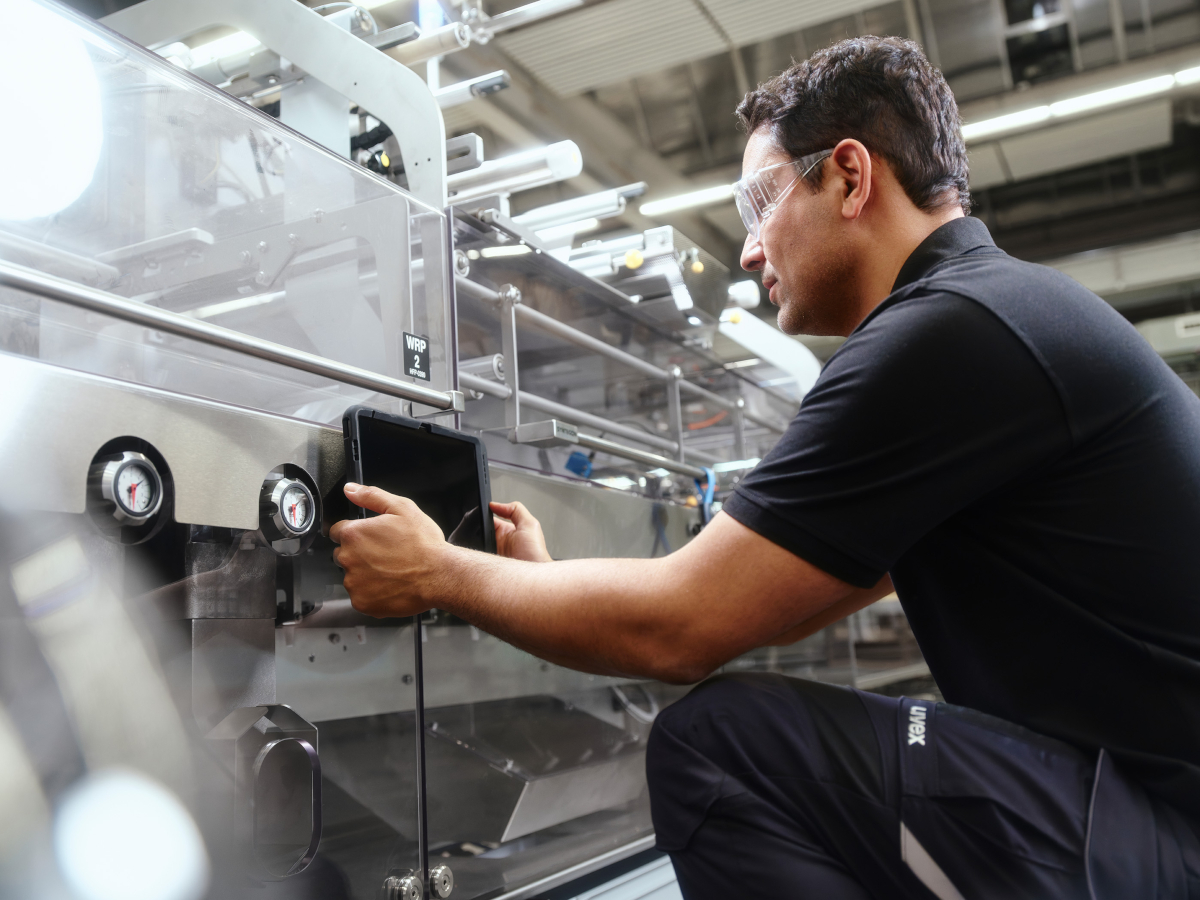
High-performance equipment is designed for speed, precision, and reliability. But technology alone does not keep a line running. Daily performance is sustained by the people who operate, adjust, clean, maintain, and troubleshoot the equipment.
Operators and technicians must connect machine functions, safety routines, changeover steps, and maintenance tasks under real production conditions. When this knowledge is incomplete or unevenly distributed, start-ups take longer, changeovers become inconsistent, and small deviations turn into recurring problems.
Training addresses this gap. It helps teams turn technical information into confident action on the shop floor.
When performance is also a knowledge issue
A loss in output may be linked to equipment condition, process parameters, staff turnover, or the way teams respond to deviations. Training cannot replace technical service: a worn component still must be replaced, and an unstable process analysed.
But even the right technical solution depends on people who understand what has changed and how to respond. This becomes visible during a new machine start-up, after staff changes, or when the same fault keeps returning. The challenge is often not a lack of information, but a lack of confidence in applying it.
Learning before production pressure starts
Teams need to understand a machine before they are expected to solve problems on it. Web-based training can create this foundation before an on-site session, during onboarding, or as refresher learning. Operators and technicians build basic knowledge at their own pace and arrive better prepared for practical training.
The shop floor is rarely the ideal place to absorb complex fundamentals for the first time. When the line is running, people need to act rather than piece together a machine’s logic from isolated instructions.
Expert-led classroom sessions create space for questions and relate technical content to the customer’s production environment. Yet understanding is only the first step. Knowledge creates value when it can be applied in daily work.
Confidence is built on the machine
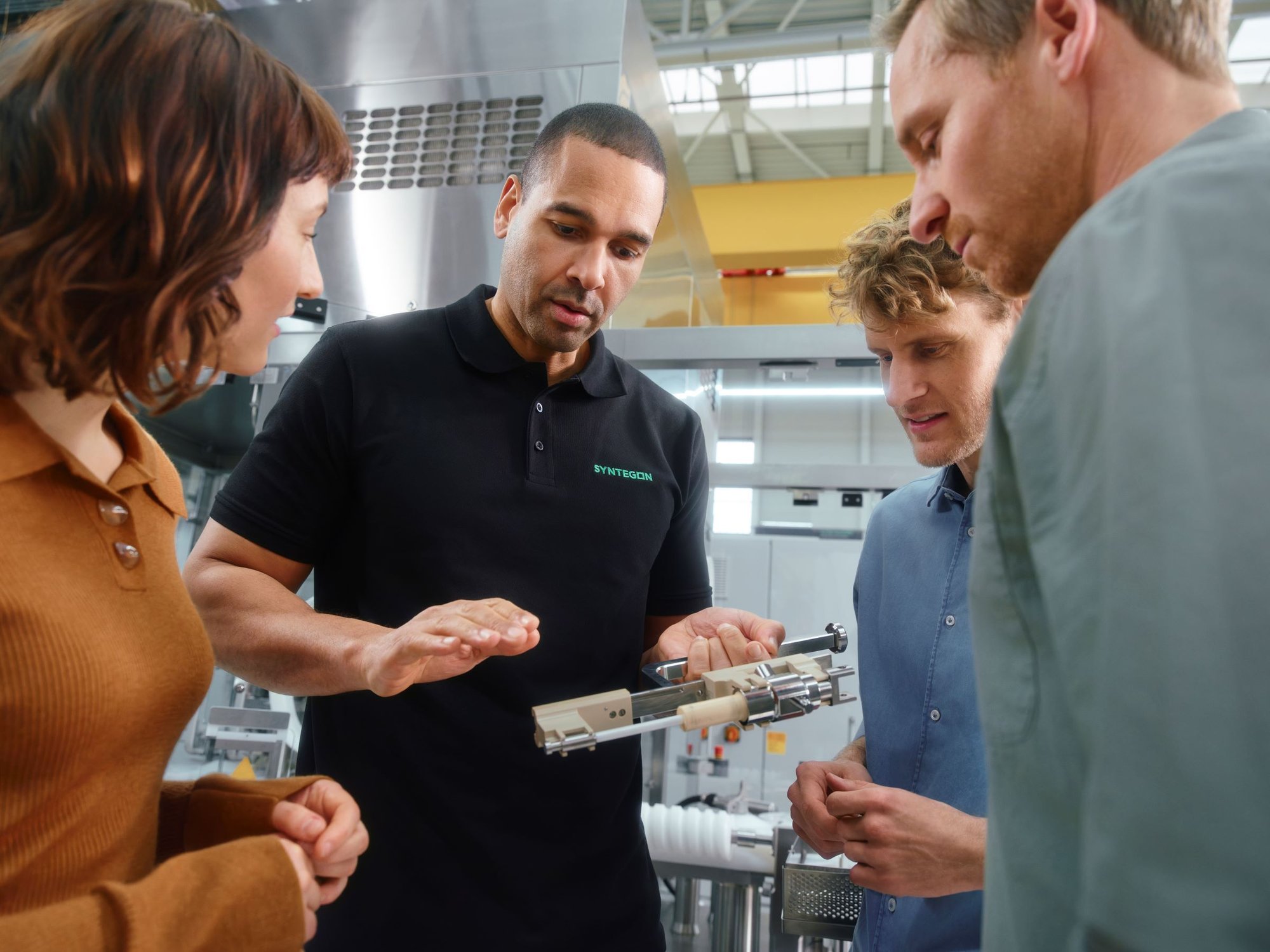
Hands-on training turns explanation into action. Guided by Syntegon experts, teams practice operating procedures, changeovers, maintenance routines, troubleshooting steps, and, where appropriate, failure simulations directly on the equipment.
This experience helps operators work more consistently and technicians recognize deviations earlier. Teams learn not only what to do, but why a procedure matters and how one adjustment affects the wider process. This strengthens judgment and reduces risky improvisation.
Knowledge must remain available
The decisive test often comes after the session: Is the knowledge still available during a night shift, a difficult changeover, or the onboarding of a new colleague?
Digital work instructions support teams directly in these situations. Step-by-step guidance with pictures, drawings, or videos helps operators carry out recurring tasks correctly. This is especially valuable across shifts and sites, where experience may be distributed unevenly.
Work instructions reduce uncertainty, support common standards, and make knowledge less dependent on individual employees. Retention is what turns training into a lasting performance tool.
From training event to learning journey
Effective training follows a practical sequence: explain, practice, apply, retain. Teams first build an understanding of machine functions, processes, and safety aspects. They then practice relevant tasks, apply procedures in daily production, and retain knowledge through digital support and refresher learning.
The aim is not simply to complete a course, but to make knowledge part of daily routines. The benefits can include faster onboarding, more consistent operation across shifts, quicker responses to deviations, fewer avoidable errors, safer work, and stronger machine performance.
Training built around production reality
No two production environments are the same. One manufacturer may be preparing for a new line start-up. Another may be dealing with staff turnover, recurring changeover issues, or the need to refresh an experienced team’s knowledge.
That is why Syntegon Training combines digital modules, classroom sessions, hands-on training, and work instructions according to the specific capability gaps. The focus is not on a standard package, but on the equipment, processes, people, and operational goals involved.
Turn know-how into output – with Syntegon Training
A machine’s potential is defined by engineering. Its daily performance also depends on the people around it. Syntegon Training helps strengthen this connection by identifying operational challenges and developing a learning approach aligned with the customer’s production reality.
The result is practical, targeted training that goes beyond transferring information. It helps teams apply and retain know-how – so that knowledge becomes confident action, and confident action becomes stable output.
Syntegon Newsletter
Get inspired with regular updates on technologies and services, case studies, webinar offers and events.