


Discover Syntegon's innovative approach to opaque product inspection presented by Jan Sende at the PDA Visual Inspection Forum. Join the conversation today!
Key Takeaways
- Comprehensive process analyses identify specific opportunities for reducing energy and water consumption, CO2 emissions, and operating costs.
- Customized optimizations, upgrades, and retrofits increase efficiency without compromising quality or compliance.
- Scientifically sound evaluation tools make potential savings transparent.
Rising energy costs, ambitious sustainability goals, and strict regulatory requirements are increasing pressure on pharmaceutical manufacturers to make their processes more energy- and resource-efficient without compromising product safety, quality, or compliance. This presents an apparent contradiction – and a challenge, particularly during energy-intensive steps such as sterilization. As products, process parameters, and equipment configurations vary considerably from one application to another, there is no one-size-fits-all approach to improving energy efficiency. Syntegon therefore supports customers with a comprehensive analysis of their sterilization process and a customized optimization concept.
Individual processes require tailored solutions
Syntegon’s experts work closely with pharmaceutical manufacturers to analyze energy and media consumption, as well as process parameters, system configurations, and product-specific requirements. This allows them to identify the measures that offer the greatest benefit for each production environment.
Based on the analysis, Syntegon’s experts develop various optimization scenarios together with the customer and assess their economic and environmental impact on the sterilization process. Depending on the specific requirements, these may range from minor process adjustments to technical upgrades or retrofits.
“Many optimization opportunities only become apparent once we understand the sterilization process in detail. This in-depth process knowledge helps us provide our customers with sound, targeted advice.”
Elias Hashemian Nik, Product Manager Sterilization at Syntegon
From analysis to targeted measures
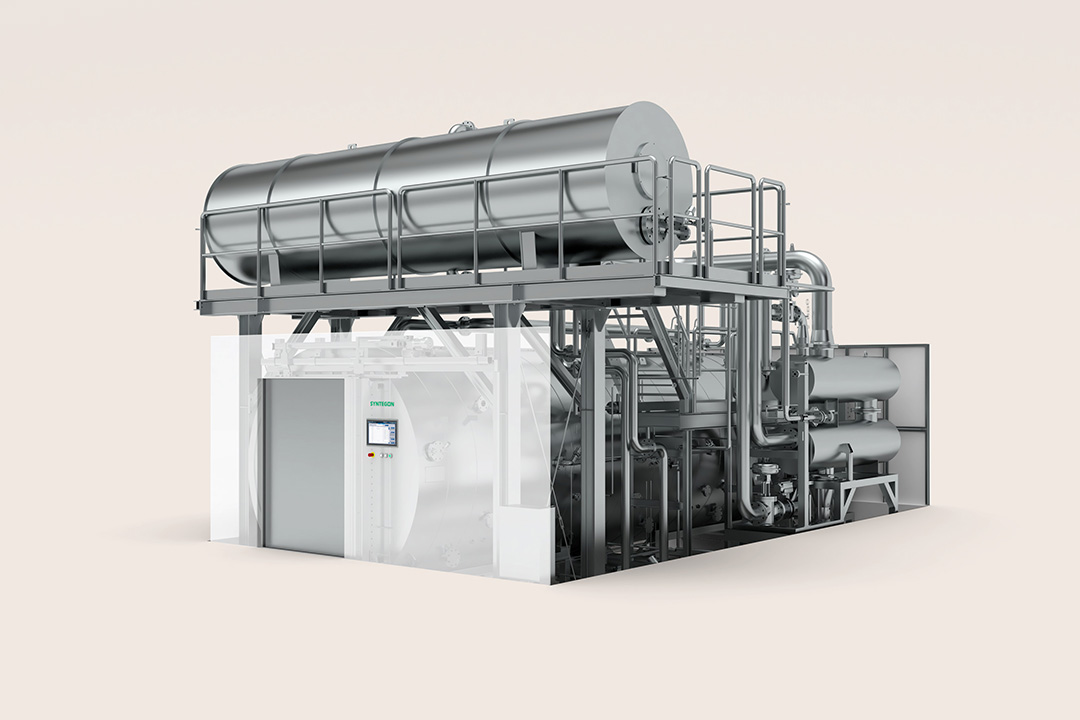
The benefits of this deeper process understanding are evident in the hot-water shower technology (HWBV) from SBM Schoeller-Bleckmann Medizintechnik, a Syntegon company. As part of his doctoral thesis at Graz University of Technology, Product Manager Elias Hashemian Nik used numerical simulations to analyze flow and heat transfer processes in hot-water shower sterilizers and identified new opportunities for optimization. The results show that it is not just the amount of process water that is crucial, but above all how evenly it is distributed across products.
This detailed process understanding enables targeted improvements – for example in process parameters, water flow, and the design of water distribution and product trays. Depending on the application, these measures can reduce process water consumption by up to 20 percent, CO₂ emissions and energy costs by up to 10 percent, and heating and cooling times by up to seven percent. Additional measures, such as energy recovery systems, frequency converters, or retrofit solutions, can be added according to individual needs.
Making savings potential transparent
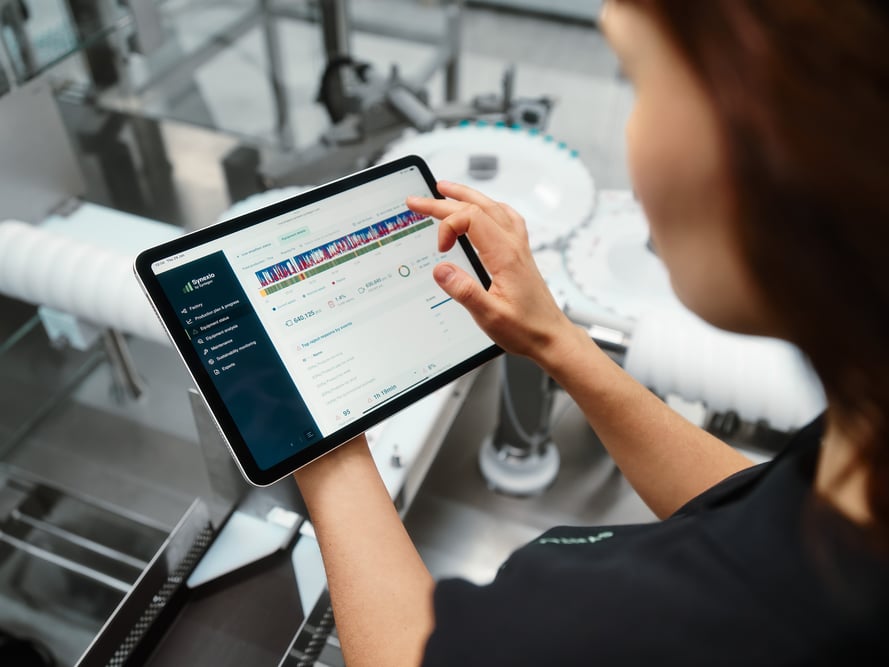
A specifically developed Lifecycle Cost & Emissions Tool quantifies potential savings by calculating possible savings in energy and water consumption, CO₂ emissions, and operating costs. This enables manufacturers to compare different optimization options, creating a transparent basis for investment decisions. Many optimizations can be implemented with manageable effort, for example by adjusting individual process parameters or upgrading specific components.
Your benefits at a glance
- Reduce energy and operating costs
- Reduce water and resource consumption
- Identify savings potential early on
- Make informed investment decisions
- Optimize processes over the long term
Process expertise for sustainable optimization
The research findings now directly support Syntegon’s customer consulting as they help to comprehensively evaluate sterilization processes, identify opportunities for optimization, and tailor measures to specific production requirements. As a result, manufacturers benefit from scientifically sound recommendations and expert support in making their sterilization processes more efficient step by step.
Syntegon Newsletter
Get inspired with regular updates on technologies and services, case studies, webinar offers and events.