

In the context of Annex 1, First Air is emerging as an important benchmark for aseptic production lines. Read why it’s worth focusing on this topic right now, and how Syntegon can help with implementation.
Key takeaways
- First Air protects open containers and critical surfaces
- Considering First Air and hygienic design early on reduces the risk of later adjustments
- UDAF-optimized components, CFD simulations, and smoke studies facilitate implementation
- Syntegon offers expert services – from consultation and analysis to upgrades and new First Air compliant machines
Despite still receiving comparatively little attention in regulations like Annex 1, First Air has sparked many discussions in the pharmaceutical industry. Along with consistent hygienic design, it is essential for aseptic processes. Hence now is a good time to start with implementation.
First Air: the principle
First Air refers to a flow of filtered air reaching the exposed object without interruption. This low-turbulence flow minimizes whirls, thus protecting the product in open containers. Critical surfaces such as sorting bowls, stopper conveyors and locks require additional protection. Any redirection or interruption of the airflow can reduce air quality. The goal is to keep the airflow in the critical process area as uninterrupted as possible. Sterile inserted format parts are tolerated, as they represent a minimal source of microbiological contamination.
Regulatory developments for First Air
Although First Air receives less attention than other topics in the current version of Annex 1, the principle has already gained attention in regulatory surroundings. Associations like PDA and ISPE, as well as regulatory bodies worldwide, focus on preventing contamination in critical process areas. Still perceived as a mere recommendation, First Air could soon become a mandatory requirement. Consequently, taking First Air into account now helps establish a foundation for future inspections and avoids costly retrofits. Translating these requirements into suitable equipment solutions is a key priority.
Machine concepts for safe airflow
Implementing First Air is a challenging task. On the one hand, as few components as possible should obstruct the airflow between filter and product. On the other hand, operation, maintenance, and cleaning need to be cost-effective. Syntegon addresses First Air requirements in both machine upgrades and new equipment, focusing on easily accessible machine designs and UDAF-optimized components. To achieve this, transport routes are optimized and components are positioned to allow smoother airflow. During the early development stage, Syntegon evaluates airflow patterns with Computational Fluid Dynamics (CFD). Digital flow simulations allow adjustments before a machine is built. The results are then verified by conducting smoke studies on the actual machine.
Hygienic design further reduces contamination risks
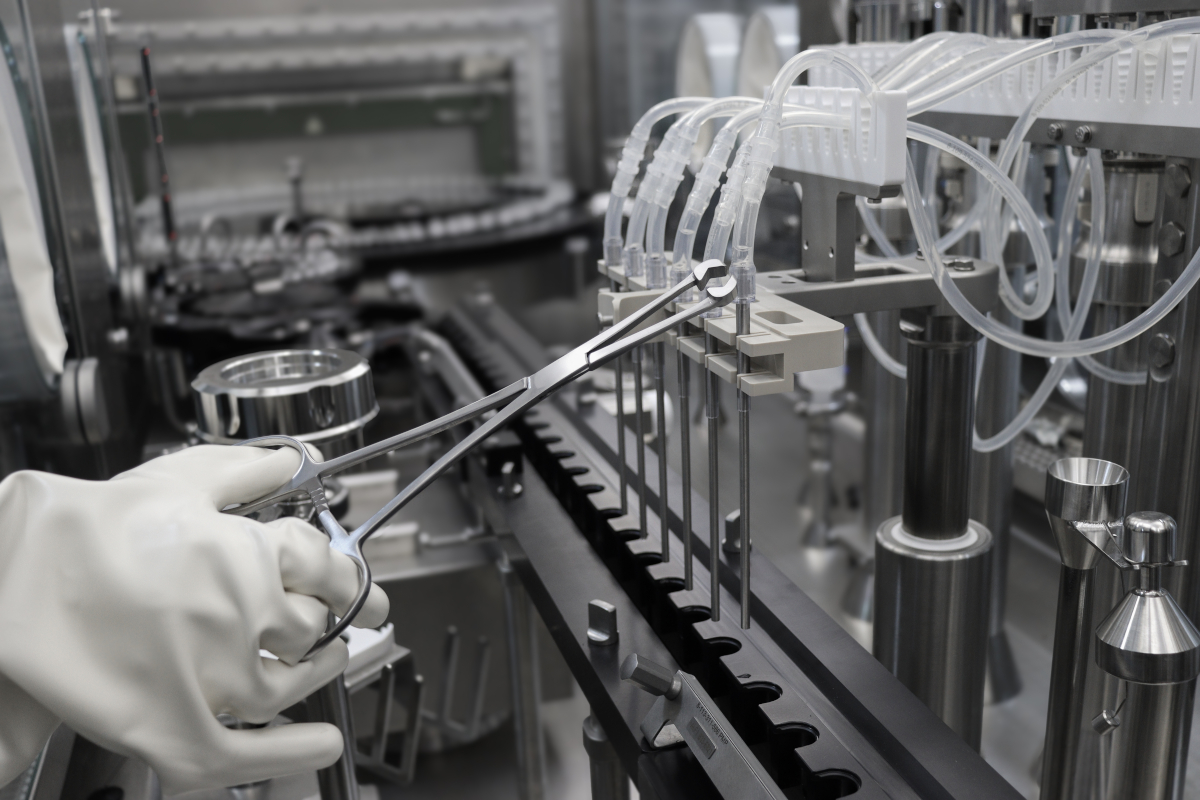
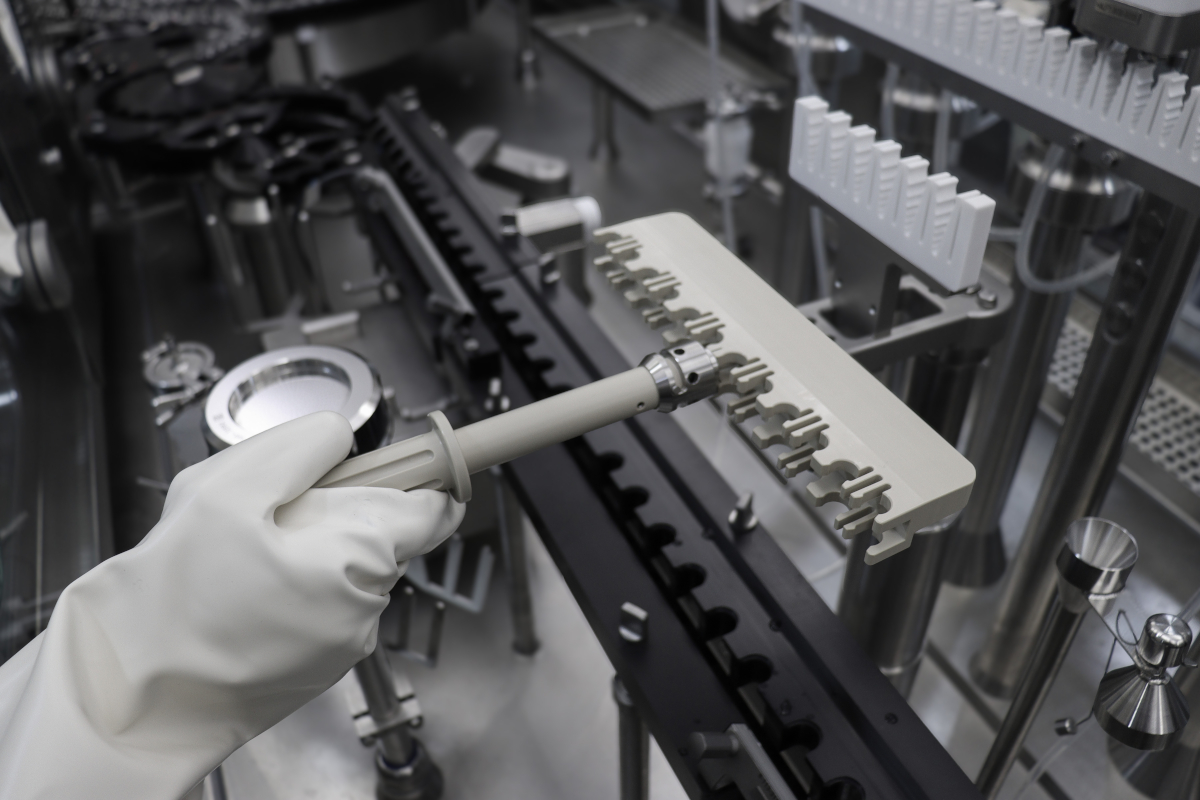
Another important factor is consistent hygienic design: Components that cannot be removed from the airflow must be autoclavable and ready for aseptic setup. This requires gloves and other appropriate tools to remove the components for sterilization and insert them back into the filling area. Standardized screw and cable ducting can quickly improve hygienic design. Moreover, latest developments focus on automation and position the robots as far away from the process as possible to let the air circulate freely.
First Air Expert Services – your benefits at a glance
- Syntegon turns First Air and hygienic design requirements into concrete machine solutions
- UDAF-optimized components for new machines and upgrades of existing ones
- CFD simulations and smoke studies help evaluate airflow patterns
- Hygienic design reduces contamination risks through removable, autoclavable components
- Station and transport concepts with clear process visibility
Moving towards First Air compliant filling together
What is still being discussed as a recommendation today can already become a regulatory standard tomorrow. It is therefore highly recommended to include First Air in the planning and optimization process of equipment. As your lifecycle partner, Syntegon supports you on your journey towards First Air compliant filling – from initial consultation through critical airflow assessment to the most suitable machine concepts. Whether new machines or upgrades to existing systems: Our experts are happy to help you prepare today for tomorrow’s regulatory requirements.
Syntegon Newsletter
Get inspired with regular updates on technologies and services, case studies, webinar offers and events.