

Skip to content
back

Energy-efficient pharmaceutical water

| 3 min read

Membrane processes for the production of water for injection (WFI) are considered to be particularly energy-efficient. But how exactly does the process work and what needs to be considered?

The harmonization of all major pharmacopoeias with regard to the production of water for injection (WFI) opens up new possibilities. Membrane processes are becoming the preferred method.

Key takeaways

  • WFI is indispensable for parenteral applications; can be produced using distillation or membrane processes
  • Critical starting point for the membrane process: precise pre-treatment of raw water with consistent hygienic design
  • Softening as central protection against deposits; regular sanitization essential
  • Core process: reverse osmosis, electrodeionization, and ultrafiltration
  • Continuous monitoring: crucial for compliance, efficiency, and sustainable operation

As a starting material for injection solutions for parenteral use, WFI is an indispensable component of pharmaceutical applications. For this purpose, drinking water is freed from ingredients such as germs, ions, and endotoxins. Acceptable limits and the cleaning and treatment processes are set out in the respective national pharmacopoeias. In addition to traditional distillation, the significantly more energy-efficient membrane process is now also specified in all major pharmacopoeias worldwide. To meet the strict requirements, various key points must be observed both during installation and operation.

Process steps at a glance

  • Pre-treatment
  • Softening
  • Sanitization
  • Reverse osmosis
  • Electrodeionization
  • Ultrafiltration
  • Continuous monitoring
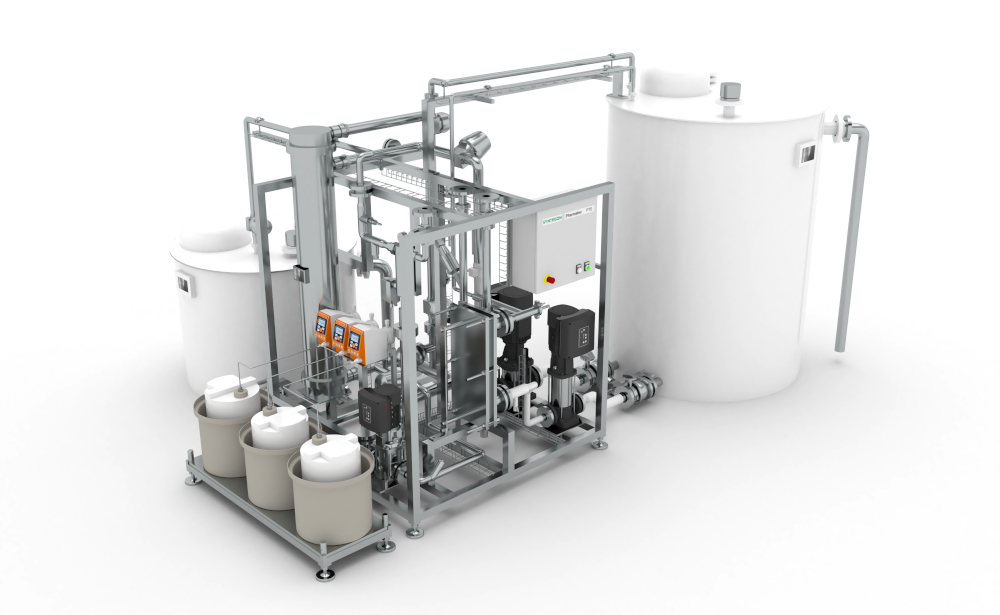
Syntegon Pharmatec 3

First step: pre-treatment

Pre-treatment removes impurities from the water that could damage subsequent membranes or cause the formation of deposits. Depending on the constituents present in the raw water, different pretreatment processes can be combined. Multiple filtration stages are ideal for removing larger particles. Total organic carbon (TOC) is adsorbed using activated carbon, and microorganisms can be killed with oxidative chemicals or rendered inert with UV radiation.

The selection and sequencing of pretreatment steps should always be determined jointly by planners, equipment suppliers, and pharmaceutical companies. To minimize the risk of microbial contamination, the principles of hygienic design must be applied from the beginning. This includes using appropriate materials and surface finishes, designed with minimal dead spaces, and ensuring continuous flow under turbulent flow conditions.

Focus on sanitization

The softening step that follows pretreatment prevents so-called hardness formers, such as calcium and magnesium, from forming insoluble compounds in the water. Alternatively, the solubility limit of these hardness formers can be increased using antiscalants. However, since operators may be required to demonstrate the complete removal of all antiscalants from the final product, softening water with cation exchange resins is usually the more suitable option.

However, softening also poses the greatest risk of contamination of pharmaceutical water. It is therefore advisable to sanitize the resin during production using chemicals or hot water. Chemical sanitization requires a lower investment but is less effective than fully automated hot water sanitization, which can be performed during operation without manual intervention.

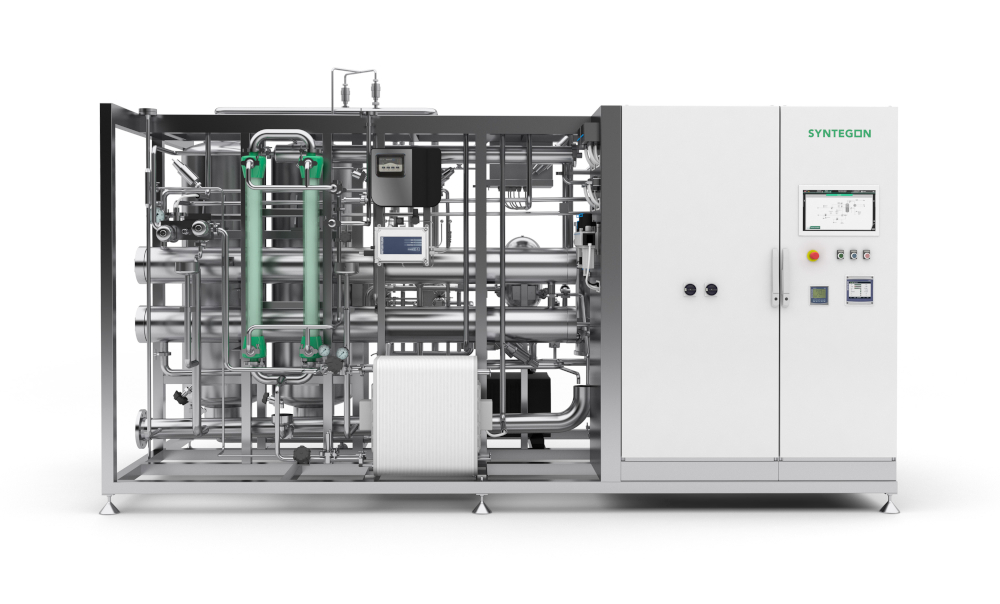
MWFI Rendering Machine

Reverse osmosis, electrodeionization, and ultrafiltration

Subsequent reverse osmosis removes ions, particles, microorganisms, and other impurities. Depending on the composition of the raw water, the system can be designed as a single- or two-stage process. Dissolved carbon dioxide is not retained by reverse osmosis, but it can be easily and cost-efficiently removed using additional processes, such as membrane degassing based on air stripping.

Continuous electrodeionization combines membrane processes and electrodialysis to reduce water conductivity to below 0.2 µS/cm. Ultrafiltration is applied downstream to remove endotoxins and bacteria, ensuring that the water complies with the acceptable limits. The concentrate created by ultrafiltration can then be recirculated upstream of the reverse osmosis system to minimize wastewater.

Continuous monitoring

To ensure compliance with microbiological limits at every stage of the process, it is essential to utilize the system optimally. Continuous operation provides the most reliable protection against microbial contamination. Therefore, modular system designs with adjustable capacity are advantageous to be able to react to changing water demand.

It is also critical to have an appropriate measurement and monitoring strategy for parameters in the product. One option is to continuously monitor the water’s TOC content. Additional filtration steps can be integrated into the system where necessary to reliably reduce TOC levels to the point where biological activity is no longer possible. Regular monitoring of transmembrane pressure and conducting integrity tests of ultrafiltration modules also provide valuable information on the condition of the filter modules and the efficiency of microbial filtration.

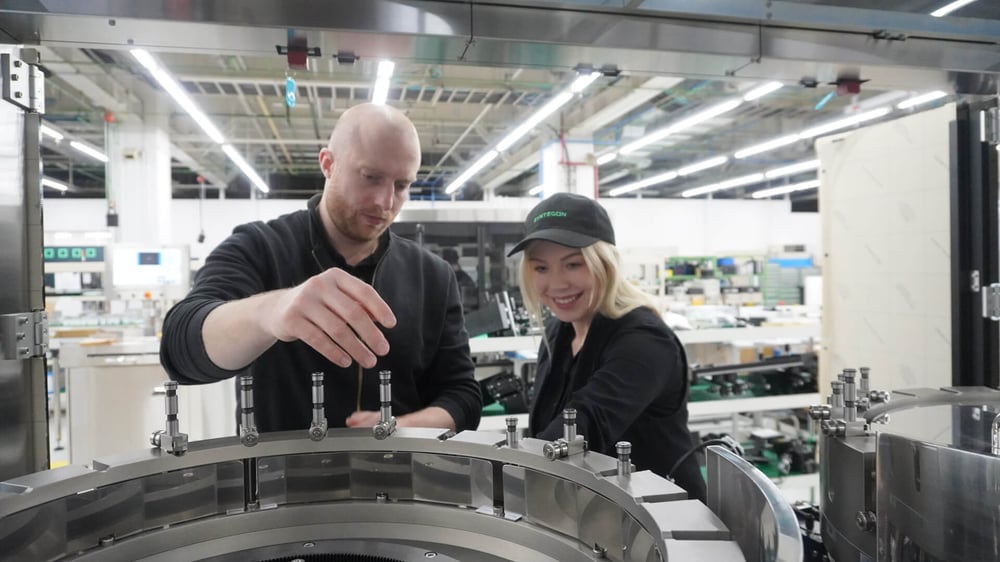
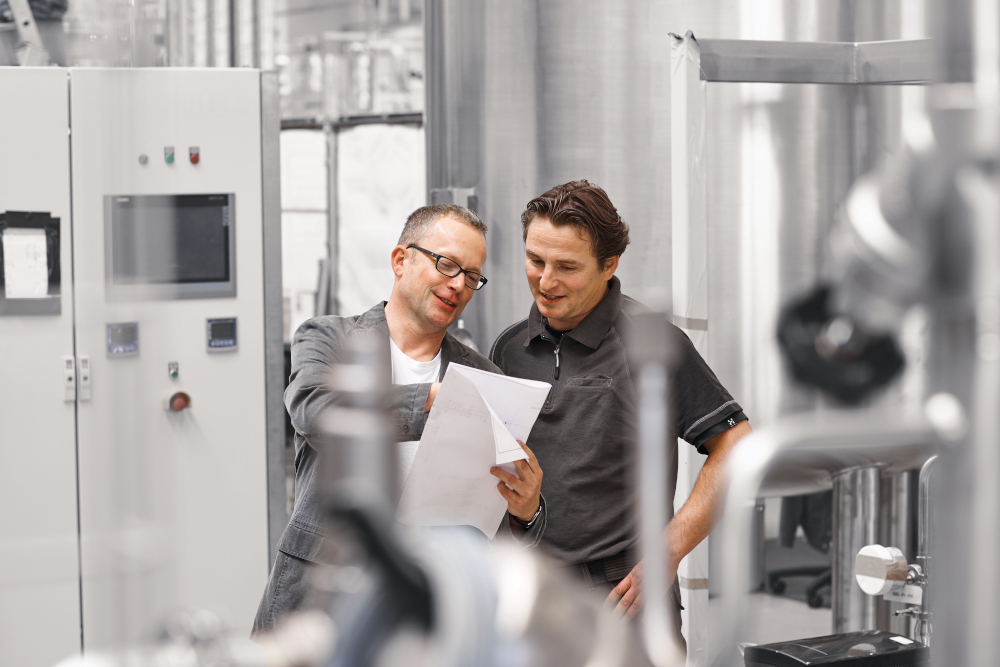
Syntegon workers planning

Working in partnership

Experience has shown that energy costs can be significantly reduced and the environmental footprint sustainably improved if all steps of the WFI production process are optimally planned, coordinated, and monitored. A key success factor is the choice of a competent partner. We are happy to take on this role and bring advanced system concepts, in-depth process consulting, and long-standing practical experience with pure media systems to the partnership. Get in touch with us!

Interested in our pharma solutions?

Interested in our pharma solutions?

Get in touch with us!
 
Worldwide contacts

Discover more about Syntegon

Energy-efficient pharmaceutical water

Discover the energy-efficient membrane processes for producing water for injection (WFI). Learn how they work and key considerations for implementation.

Lounges 2026: efficient WFI generation

Discover the future of WFI production at Lounges in Karlsruhe, Germany. Visit booth A4.4 to explore cutting-edge membrane processes with minimal footprint.

Syntegon launches AIM9 high-speed inspection platform

Syntegon launches AIM9, combining visual inspection and leak detection with up to 600 vials per minute for pharma quality.