Vial filling machines for Annex 1 compliant line solutions
One line, any vial, with maximum flexibility for Annex 1 compliant aseptic production.
Keep vial filling lines flexible across batches and formats
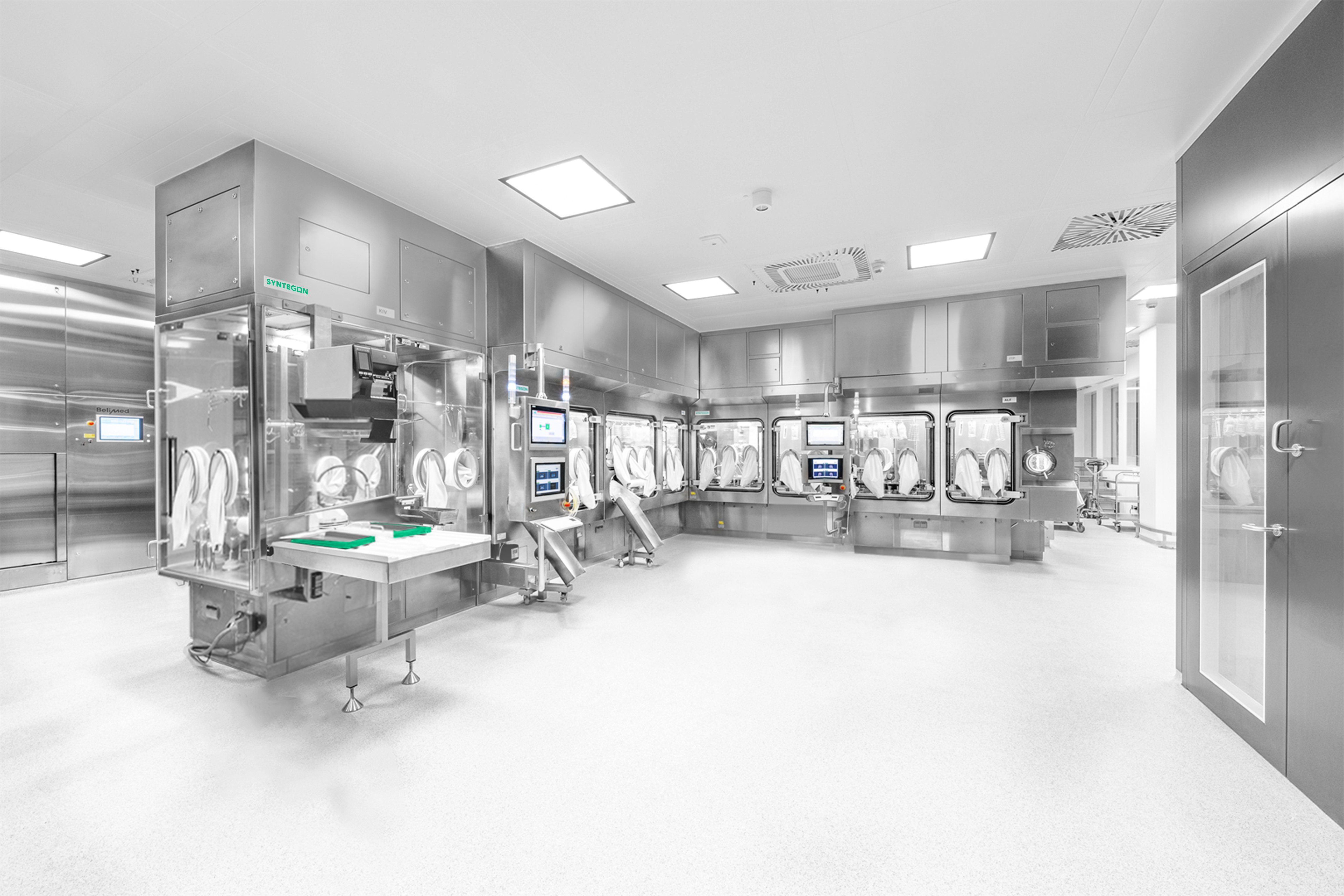
Syntegon vial filling machines are part of end-to-end, seamlessly integrated lines that adapt to changing vial formats, batch sizes, and containment concepts.
Our equipment enables rapid format changes, multiproduct processing, and simpler (re-)validation through integrated isolator, freeze-drying, and inspection solutions. With more than 1,500 installations worldwide, we help you boost capacity while staying flexible, efficient, and fully regulatory ready.
Vial filling machines: flexibility, compliance and dosage range
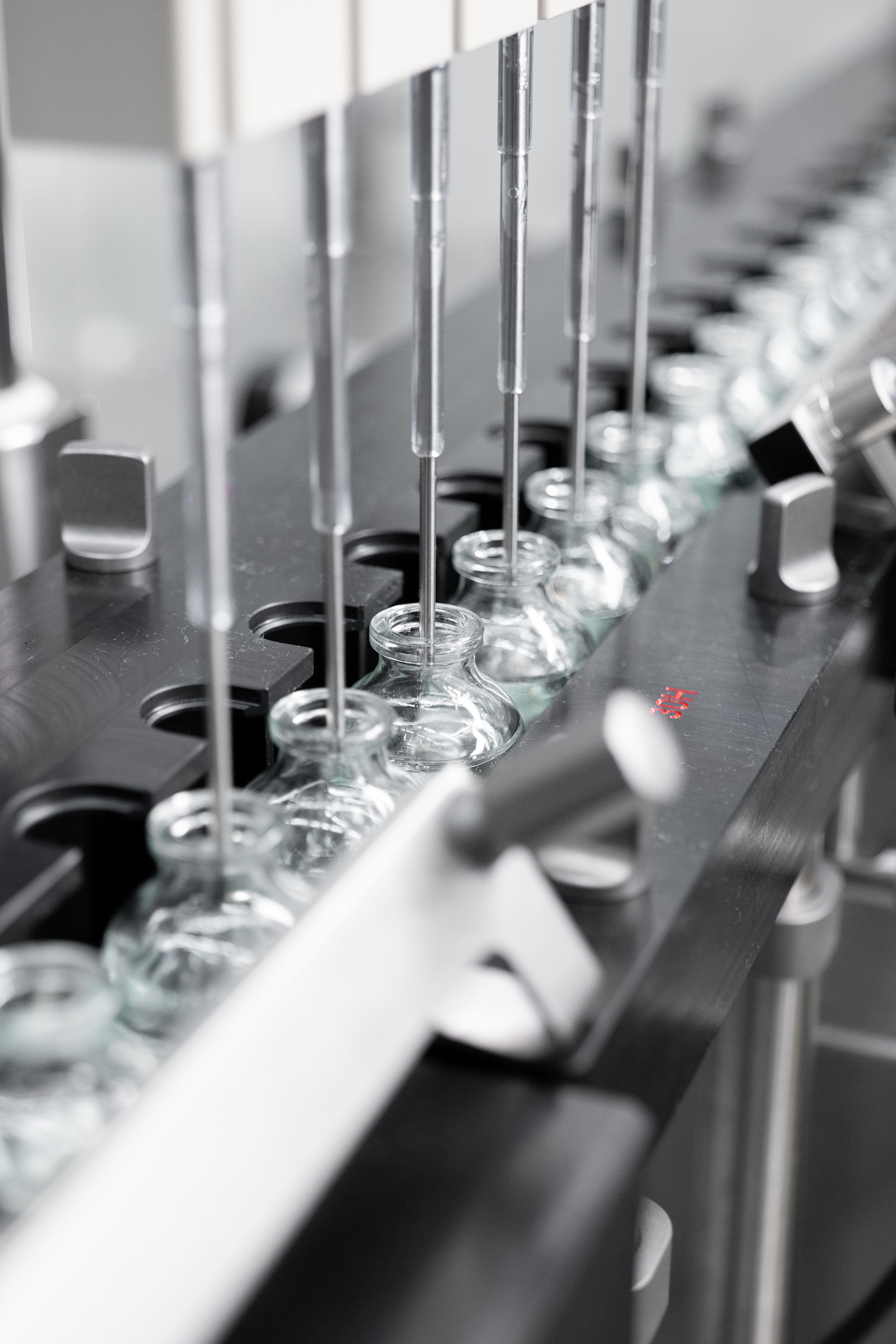
How to combine vial line flexibility and speed?
On flexible vial filling lines you can switch between different batch sizes without idle hours or extra shifts. Manual format changes and cleaning routines slow aseptic vial filling down, tie up operators and create more room for error.
Syntegon vial filling lines support fast, tool-less changeovers across a wide vial size range and batch sizes, with filling systems engineered to combine high output with reliable accuracy.
You adapt campaign plans faster, keep capacity available and maintain predictable performance. To make this work on your lines, focus on:
- Design campaigns around fast, tool-less format changes
- Standardize format concepts to simplify operator training and reduce changeover errors
- Select fit-for-purpose filling systems that support both flexibility and throughput
How to design vial filling lines for Annex 1 compliant operations?
Annex 1 puts aseptic vial filling lines under closer regulatory scrutiny from first URS to routine media fills. You need barrier technology, cleanability and inline inspection designed to help you meet applicable regulations and pass frequent QA and regulatory inspections without adding complexity to daily work.
Syntegon vial filling systems integrate isolators or RABS, PUPSIT testing, 100 % in-process control and inline inspection into one coherent line concept.
This reduces interfaces, human interventions and documentation gaps while supporting robust contamination control. To build this kind of assurance into your vial line, focus on:
- Define Annex 1-compliant URS for barrier- , cleaning- and inspection technologies
- Select vial filling isolators or RABS with minimal operator intervention
- Integrate inline inspection, filter testing and 100 % IPC early in design
- Align automation, alarms and data logging with QA expectations
How to handle different dosage forms on one vial line?
One vial filling line often has to process liquid, lyophilized, oily and highly viscous drugs from clinical to commercial scale. Each dosage form brings different filling technologies, line settings and cleaning concepts, which can fragment operations and complicate tech transfers.
Syntegon vial filling equipment supports multiple filling systems and connects seamlessly to freeze-dryers and inspection machines in one integrated concept.
You gain a single vial filling platform for diverse products instead of separate, underutilized lines and complex changeovers. To adapt to changing dosage needs without losing control, focus on:
- Selecting the best fit filling system for each product
- Choosing either single use or CIP/SIP fluid paths as required – or combining both where it makes sense
- Using our in house laboratory to run product specific filling trials and optimize parameters before scale up
End-to-end vial filling lines for flexible Annex 1 compliant production
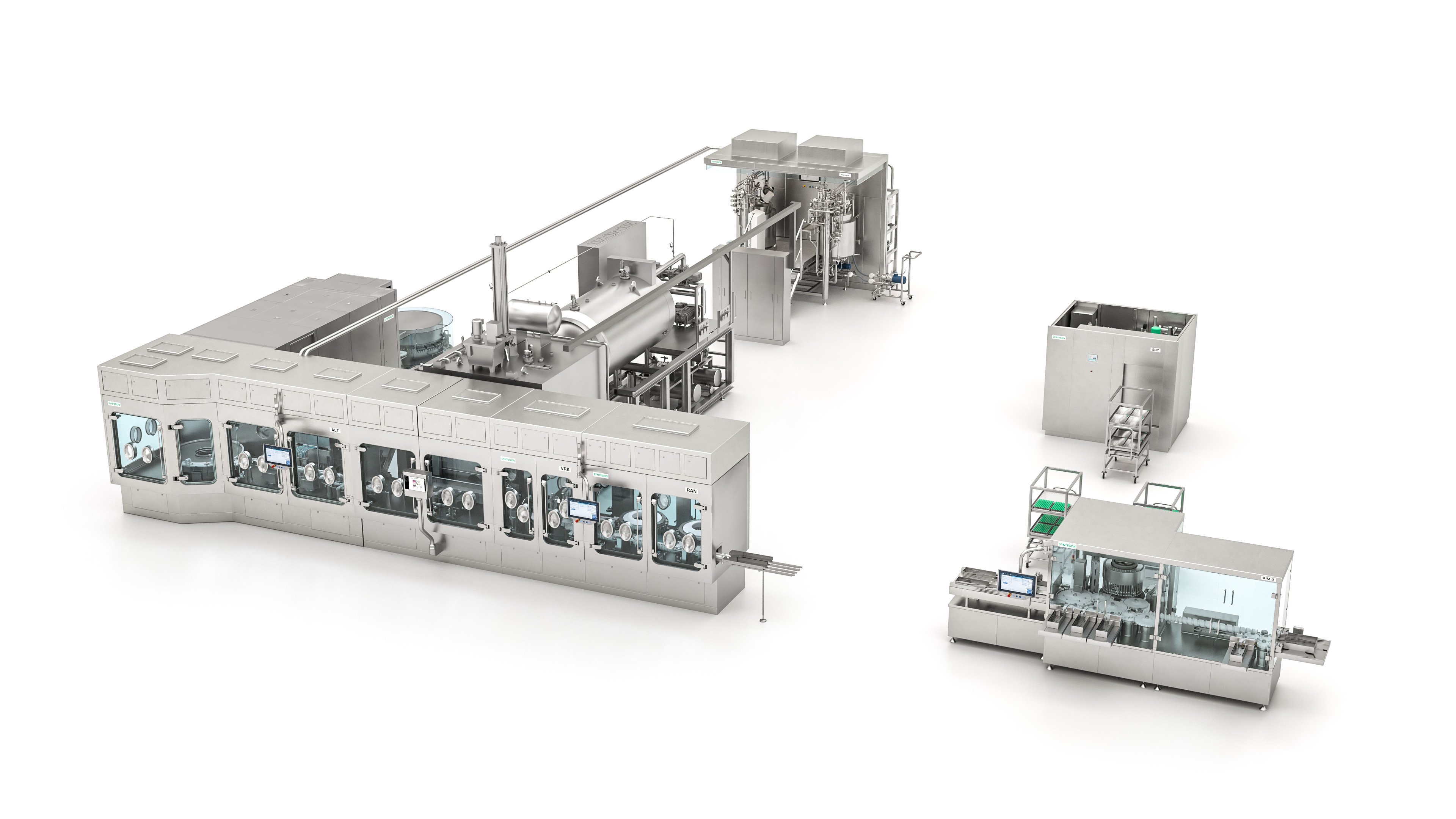
Formulation and pure media for product safety
Vial pretreatment
Filling and closing for flexible vial batches
Freeze drying integrated into your vial line
Isolator technology that limits interventions
Inspection that secures batch release
Sterilization that supports aseptic safety
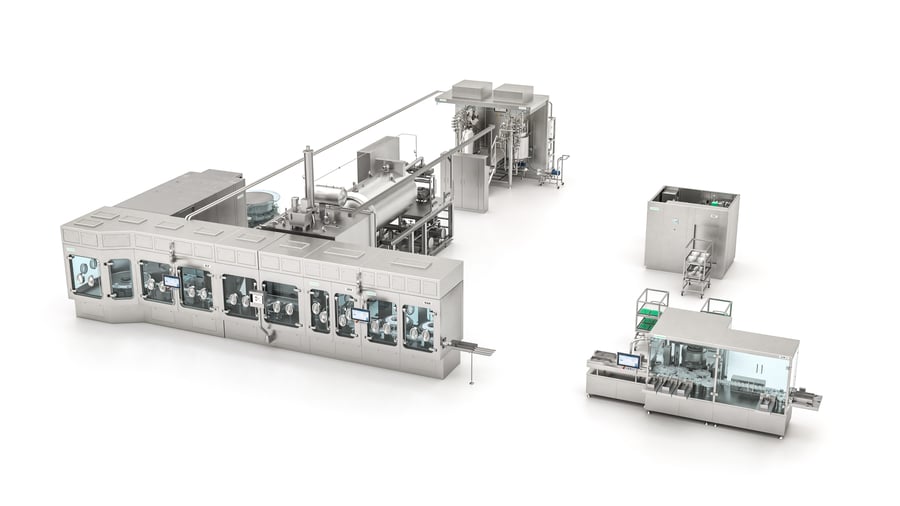
Formulation and pure media for product safety
Prepare liquid formulations and WFI to protect product quality and feed your vial filling line reliably.
Vial pretreatment
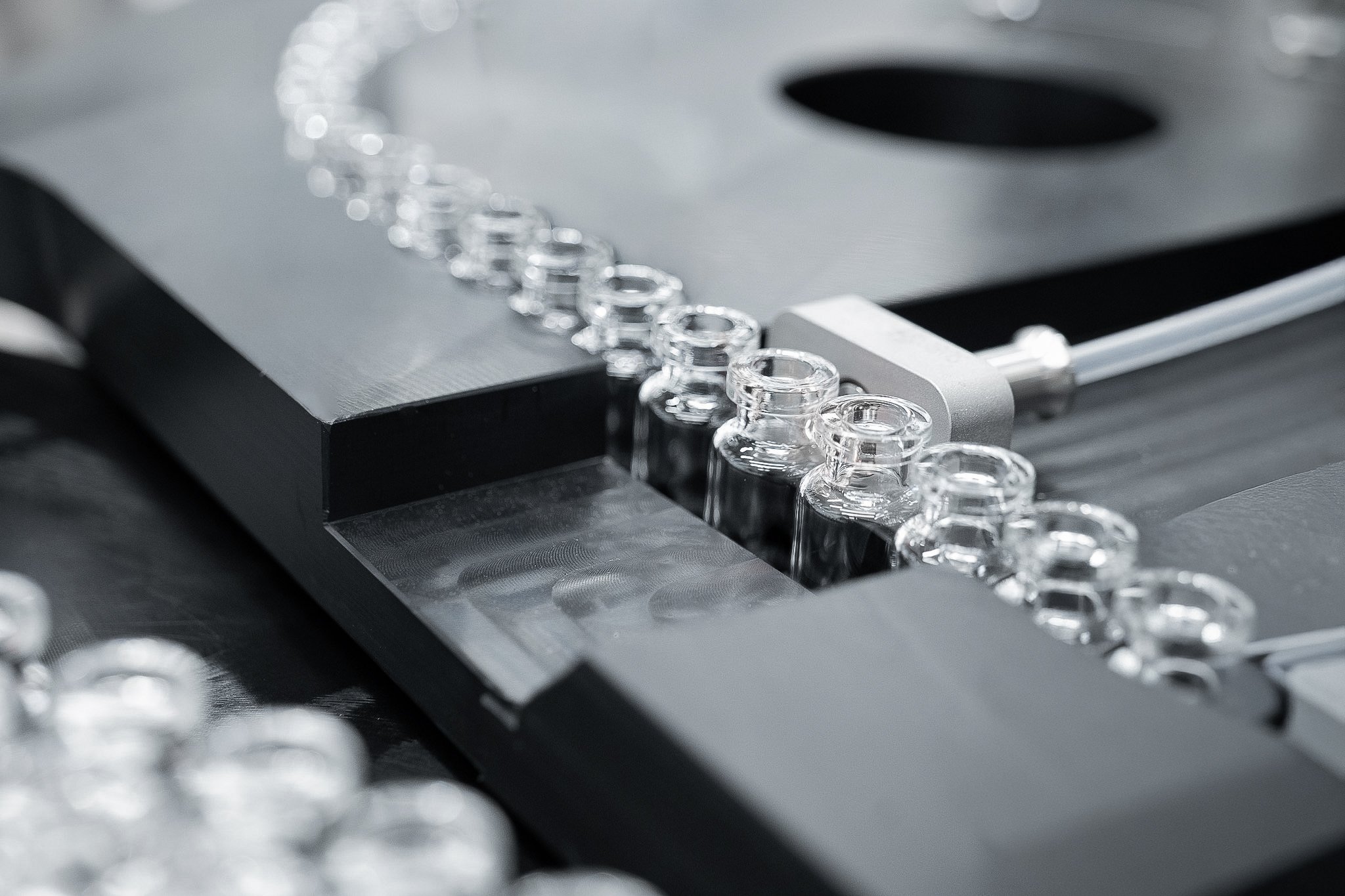
Clean, sterilize and depyrogenate vials so they enter the filling machine particle-free and ready for high-speed processing.
Filling and closing for flexible vial batches
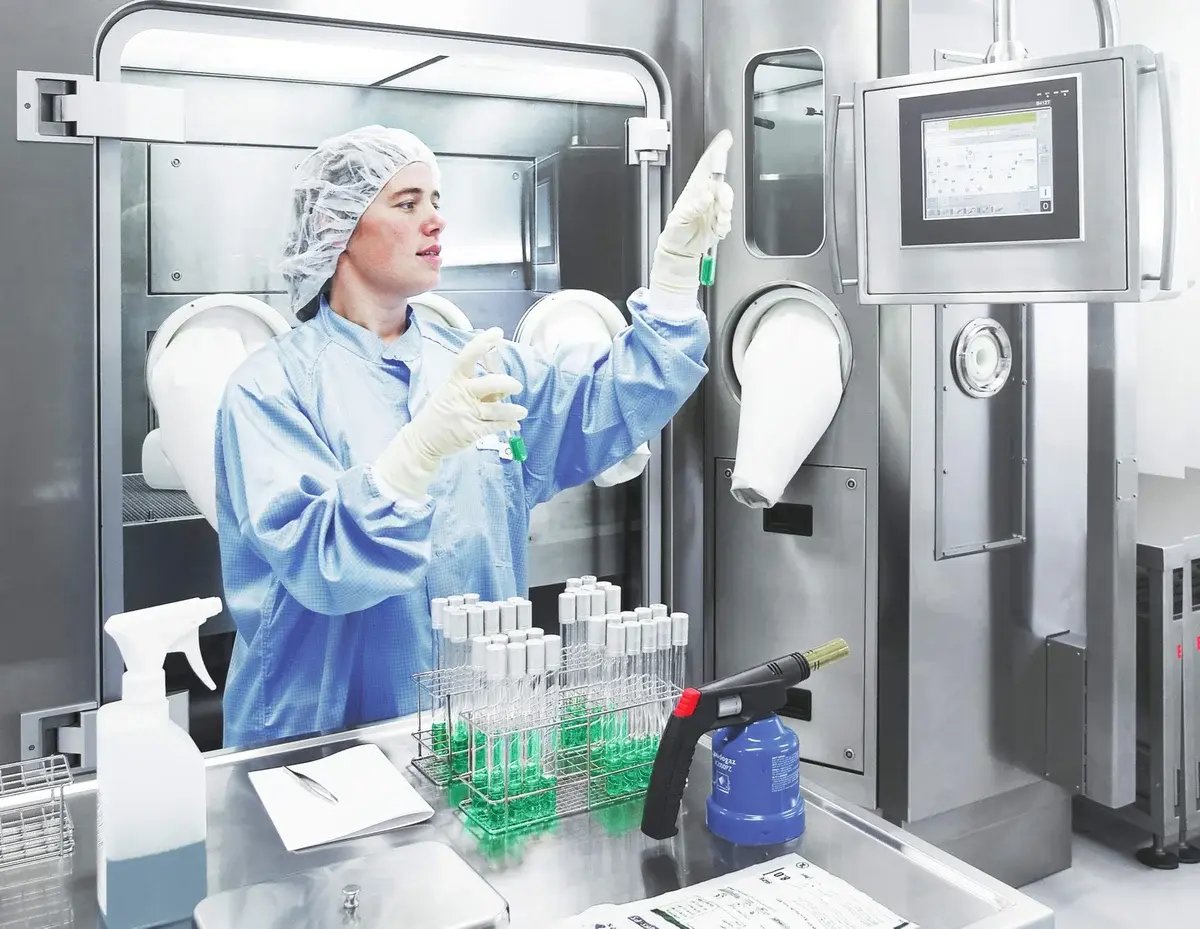
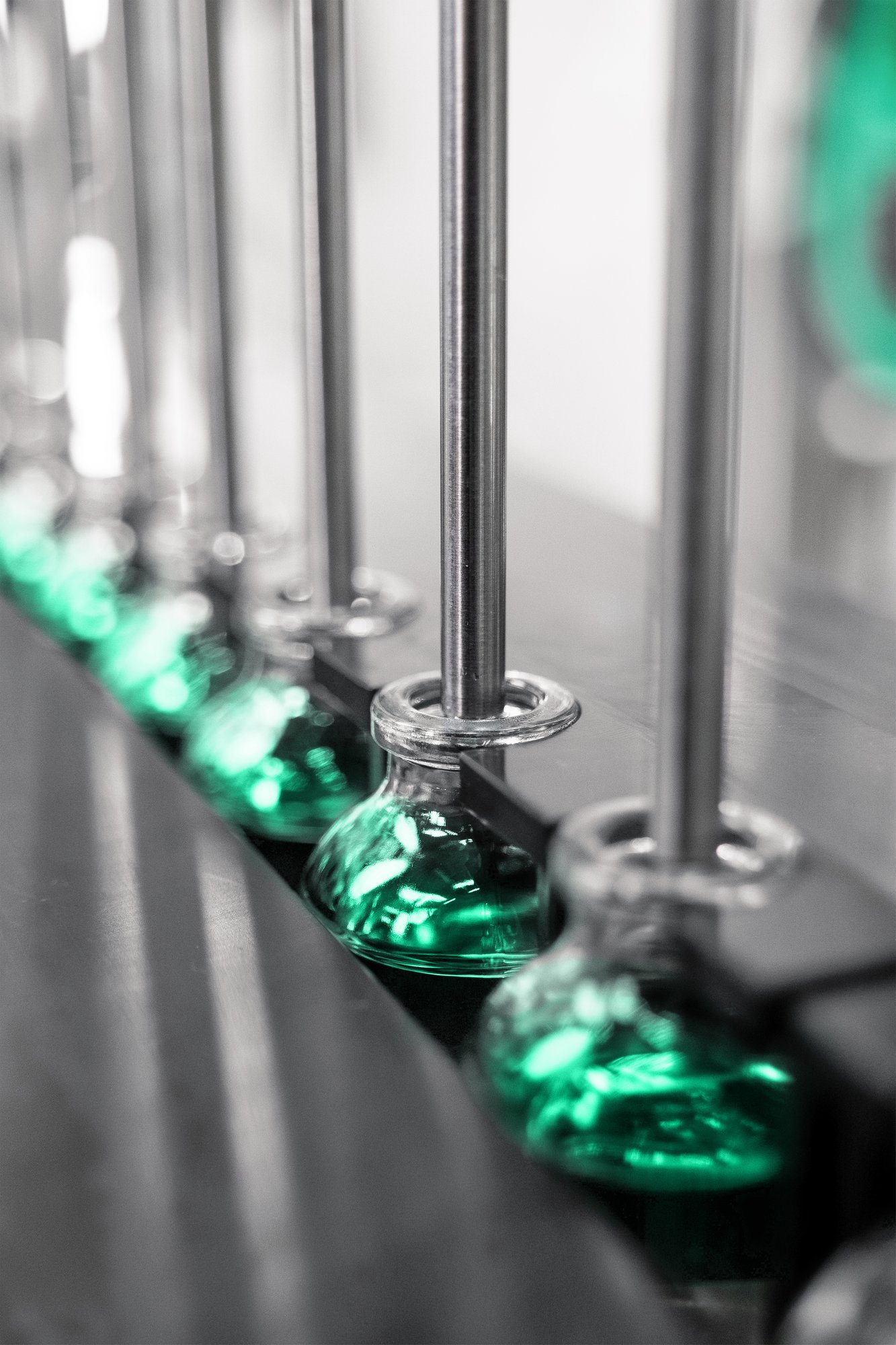
Fill and close vials in an Annex 1 compliant filling machine with changeovers that support many formats while limiting interventions.
Freeze drying integrated into your vial line
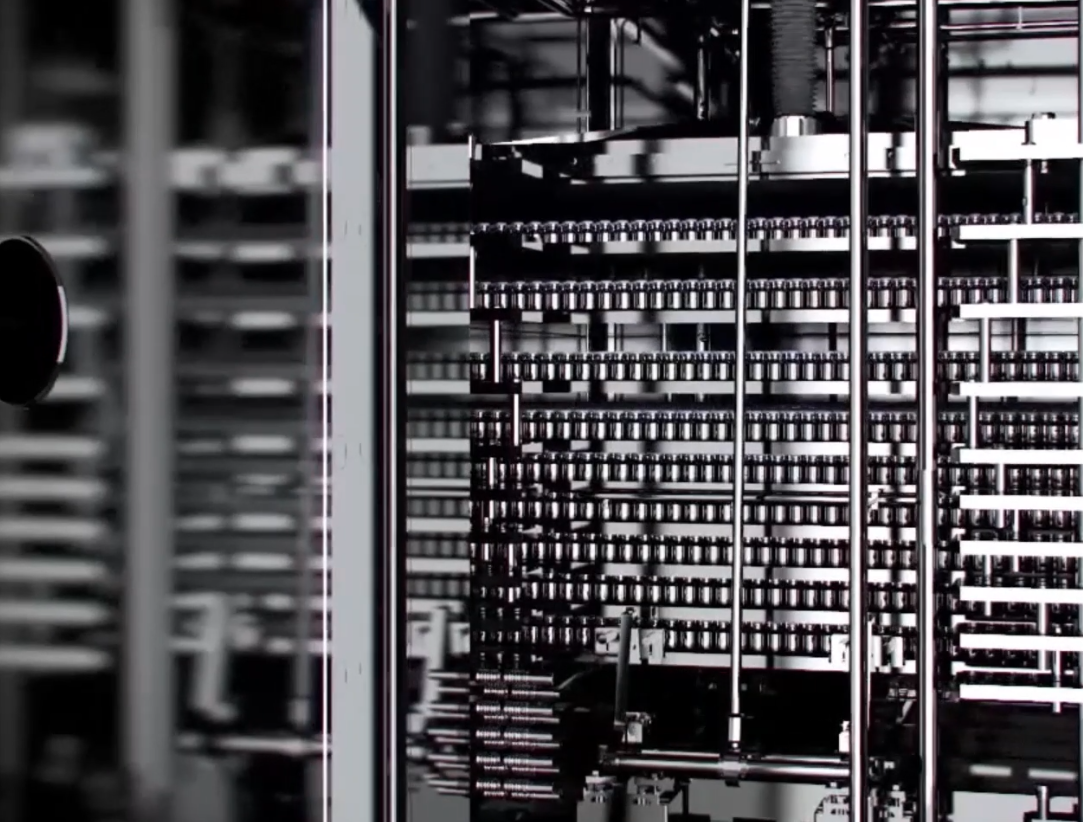
Transfer filled vials to freeze-dryers with automated loading to cut handling risk and support stable lyophilization.
Isolator technology that limits interventions
Separate operators from the aseptic area with isolators or RABS designed to help you meet applicable regulations.
Inspection that secures batch release
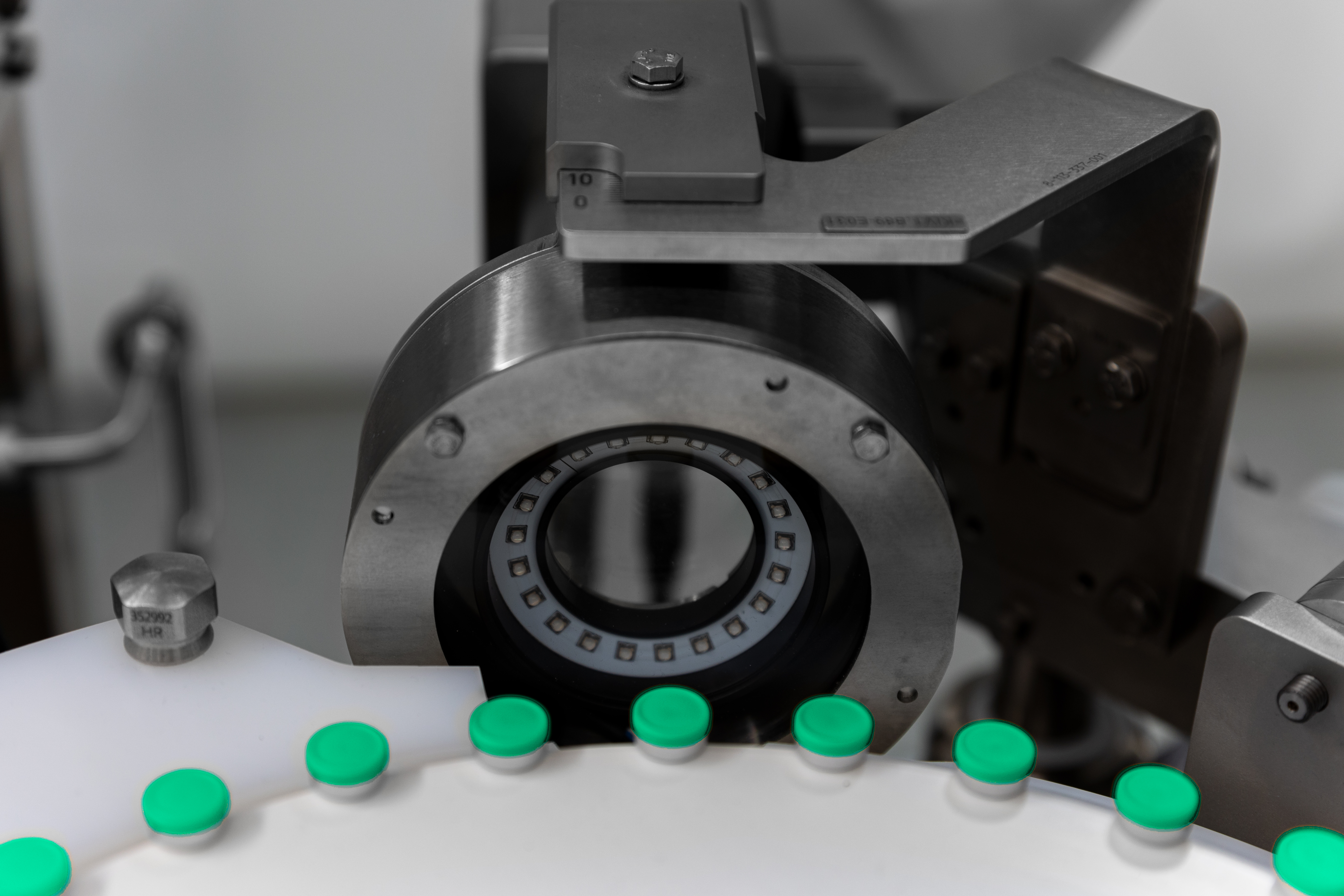
Use inline and end-of-line inspection to detect particles, cosmetic defects and leaks early so you protect every batch.
Sterilization that supports aseptic safety
Apply dry heat sterilization for components so your aseptic area receives sterilized equipment.Explore the complete line
Compare our vial filling machines
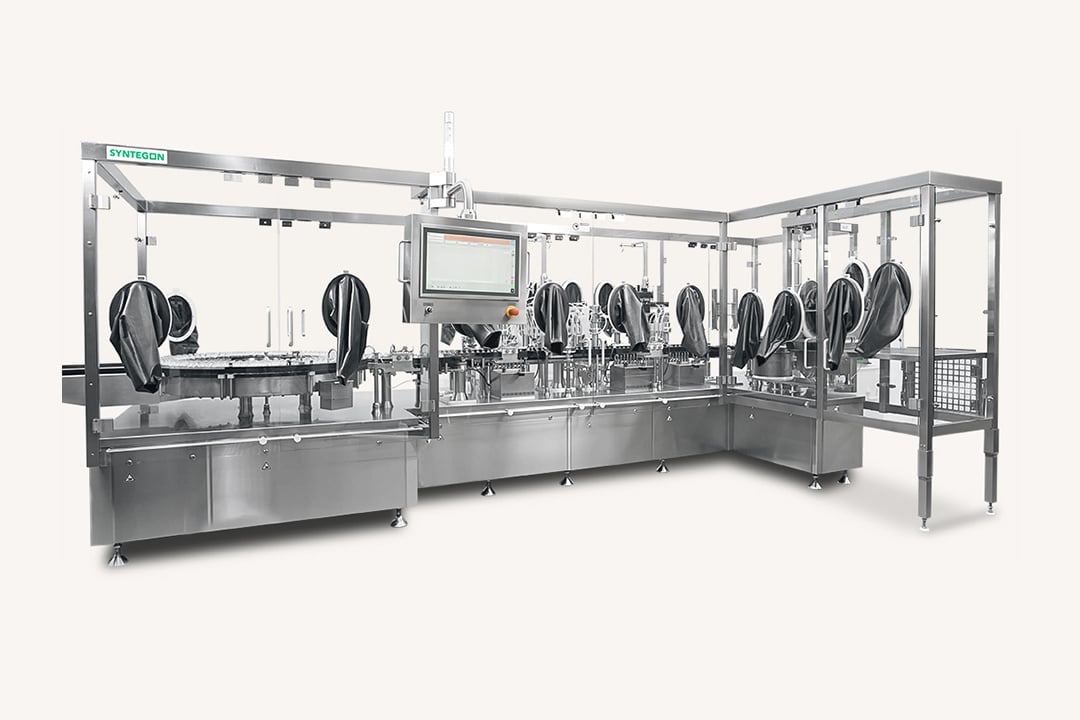
ALF 5000
Best if you want:
- Safe flexible high-speed combi line for ampoules and vials
- 100 % IPC and modular platform for high-potent or complex aseptic products
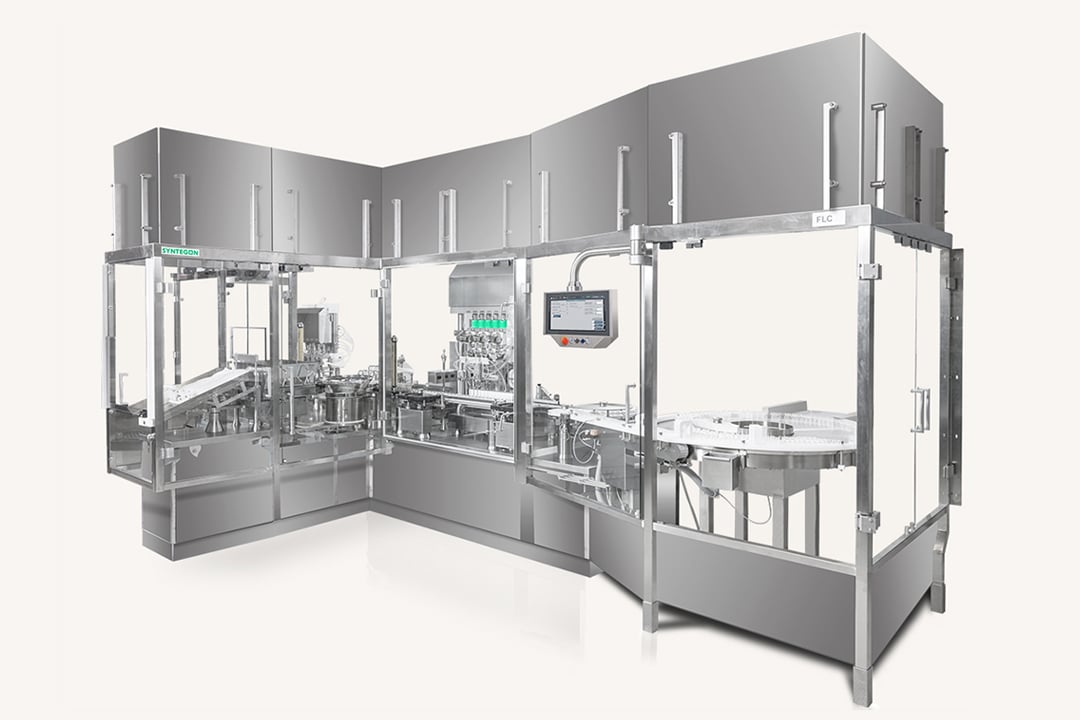
FLC 3000
Best if you want:
- Wide range, compact vial line for up to 500 milliliters
- Compact medium to high output line for flexible layouts
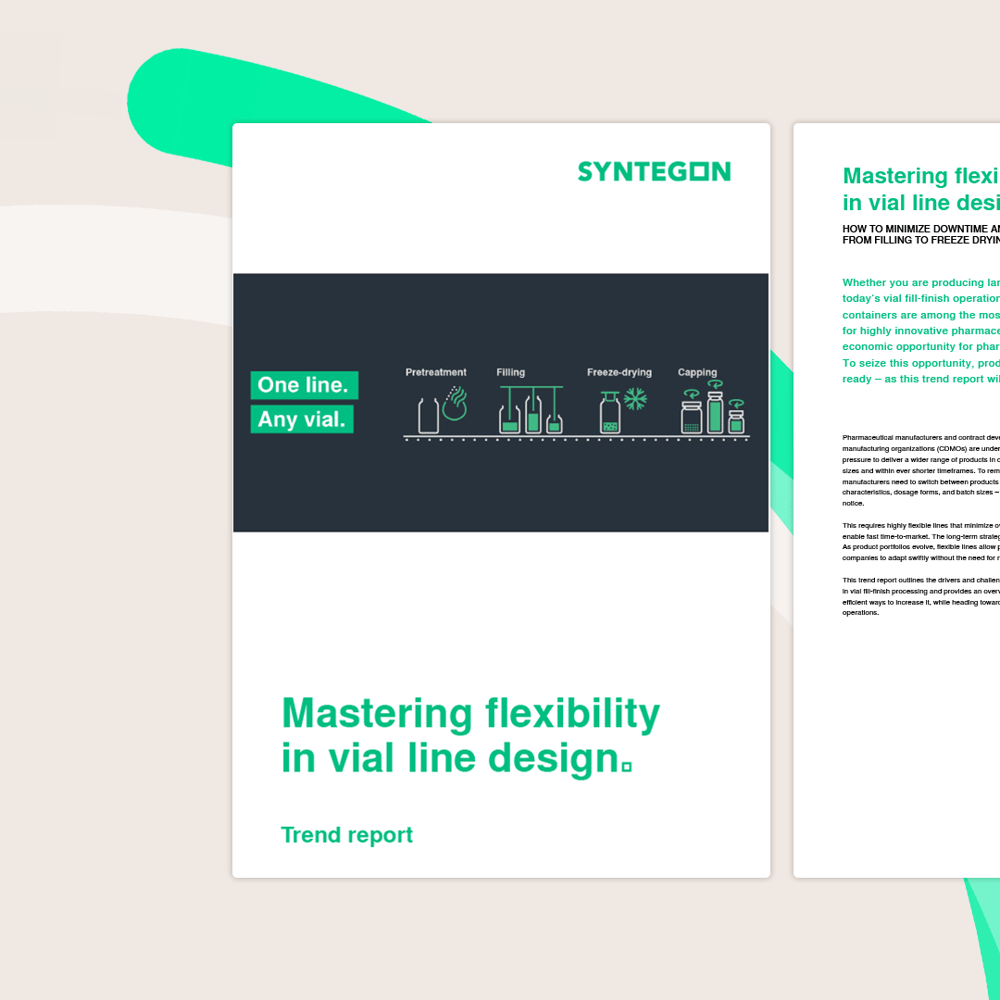
Master vial line flexibility and cut downtime
Find out how to achieve flexibility in your vial line, from filling to freeze-drying.
- Identify 5 key flexibility levers
- Reduce changeover time
- Plan modular, future-ready vial lines
Vial filling machines that combine speed, flexibility and Annex 1 compliance
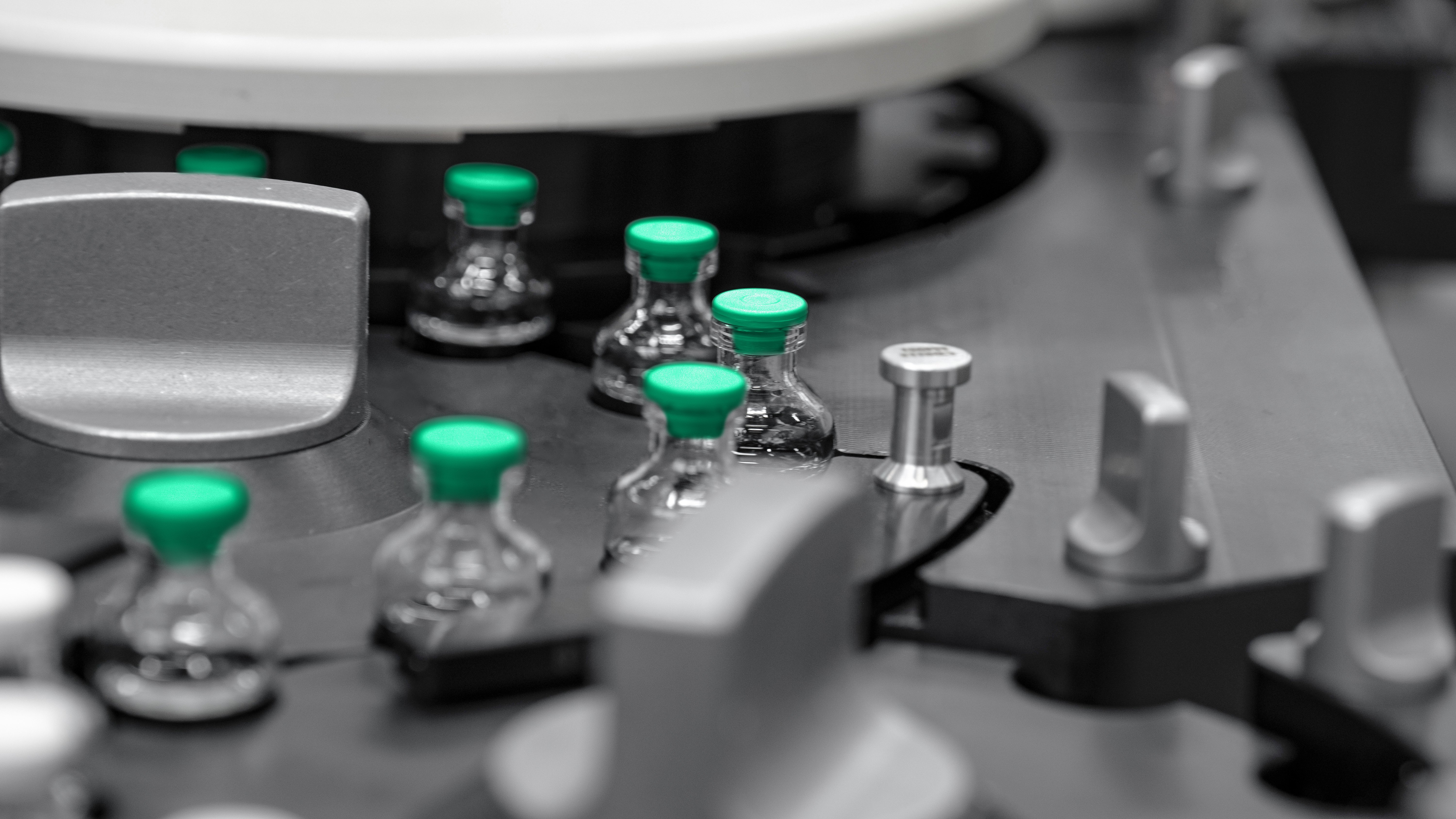
Up to 600 vials/min without losing flexibility
On many lines you still separate clinical and commercial batches across different fillers, each with its own formats and validation sets. Every change in vial size or product type triggers long manual changeovers and repeated cleaning, so output drops.
Syntegon vial filling platforms reach up to 600 vials per minute on selected configurations, with 100 % in-process control available for vials. They cover a wide format range, typically from 2 to 500 ml, and handle liquid, lyophilized, oily and viscous products on one platform.
Flexible filling technologies and features such as dose-in, dose-out, re-dose on request and run-empty-to-one-container help protect yield.
In daily work you plan fewer product moves between lines, keep more campaigns on 1 aseptic platform and rely on 100% IPC instead of manual checks.
One vial line from isolator to freeze dryer
Traditionally, isolators, RABS and freeze dryers often come from different vendors with separate automation and qualification concepts. Engineers then spend months aligning interfaces, handshakes and documentation, while operators manage manual loading steps and extra decontamination routines.
Syntegon treats isolators, open RABS, closed RABS and Telstar freeze dryers as integral parts of a modern vial filling line, not add-ons. Standardized interfaces, coordinated loading and unloading and automation and validation philosophy help reduce risky interfaces and human intervention and are designed to help you meet Annex 1 expectations.
The same line concept supports aseptic and high-potent applications and end-to-end vial-to-lyo processing.
In practice, you qualify one vial line rather than several isolated islands, plan upgrades with less revalidation effort and move fewer operators into high-risk areas.
100 % inspection concepts integrated in your vial line
On conventional lines, many quality checks still happen as offline sampling and manual visual inspection after filling. Deviations such as particles, cosmetic defects or closure issues may appear late, which risks rework, scrap or even batch loss.
Syntegon integrates inline and end-of-line visual inspection, container closure integrity testing and empty-vial checks directly into the vial filling line.
Systems check bottoms, sidewalls, necks, stopper position, crimp quality and closure defects, and support 100 % inspection concepts combined with statistical sampling.
The results feed into line automation, data logging and batch documentation to support regulatory expectations.
For daily work this means fewer manual inspection routines, earlier defect detection, clearer batch evidence and less time spent compiling data for audits.
IDT Biologika boosts high speed vial capacity with Syntegon
IDT Biologika needed a fast, flexible vial line. Syntegon enables the production of 80-100 million 2R vials per year with 100 % IPC.
Alcami doubles small batch vial capacity with turnkey line
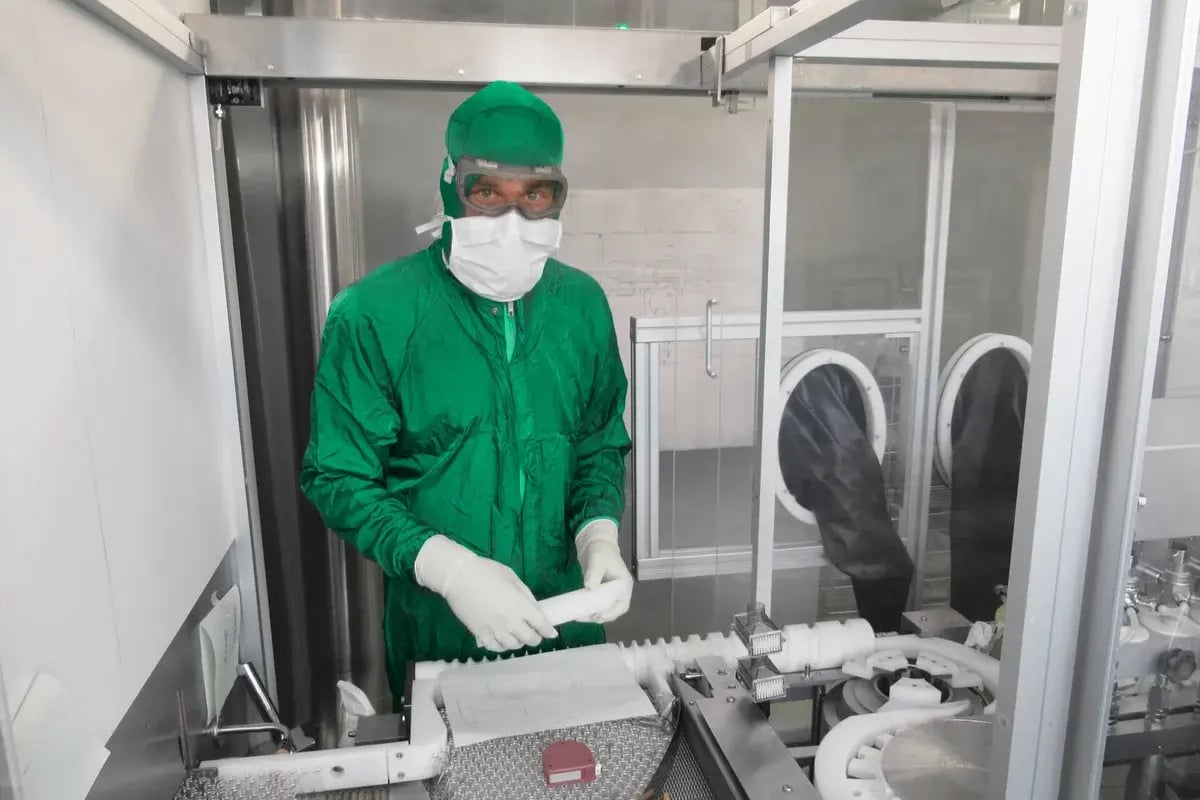
Alcami required a flexible Annex 1 compliant line for 2-50 ml vials. Syntegon's ARF isolator line more than doubled daily output at the Charleston site.
AJ Vaccines upgrades vial line for Annex 1 readiness
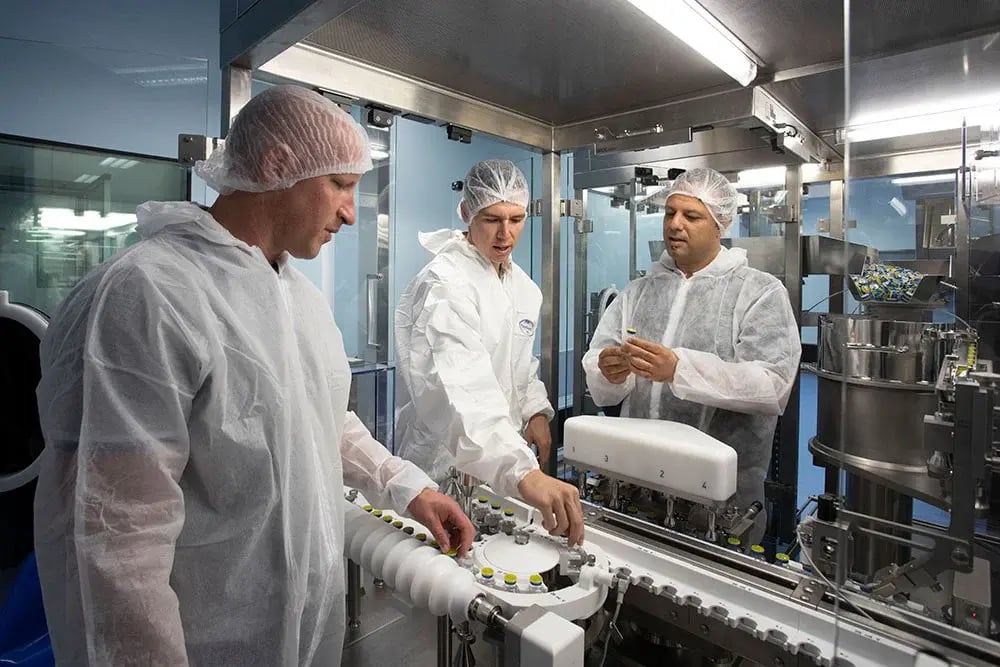
AJ Vaccines modernized an existing vial line with Syntegon RABS and barrier upgrades designed to help meet Annex 1 expectations while keeping capacity available.
Aspen Pharmacare secures vaccine vial flexibility and scale

Aspen Pharmacare partnered with Syntegon on a flexible vial filling line that increases sterile vaccine capacity and supports multiple vial formats for future launches.
Vial filling knowledge hub
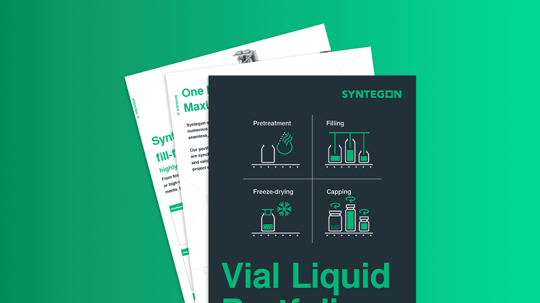
Vial filling portfolio brochure for line concepts
See Syntegon vial filling machines, formats and outputs from formulation to inspection in one overview for your next line project.
Trend report on flexibility in vial line design
Learn how to increase vial line flexibility, cut changeover and cleaning losses, and prepare for Annex 1 compliant production.
IDT Biologika high speed vial filling line case study
See how IDT Biologika scaled production to 80 to 100 million 2R vials per year with a high speed line, isolator and 100 % IPC.
Alcami small batch flexible vial filling line case study
Learn how Alcami doubled daily small batch vial capacity with a turnkey isolator line that handles 2 to 50 ml formats and lyophilization.
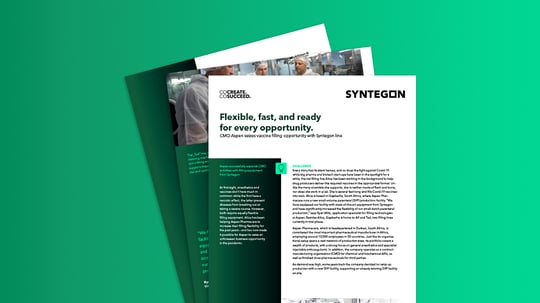
Aspen Pharmacare vaccine vial line case study
See how Aspen Pharmacare expanded sterile vaccine vial capacity with a Syntegon vial filling line designed for multiple formats ensuring high quality.
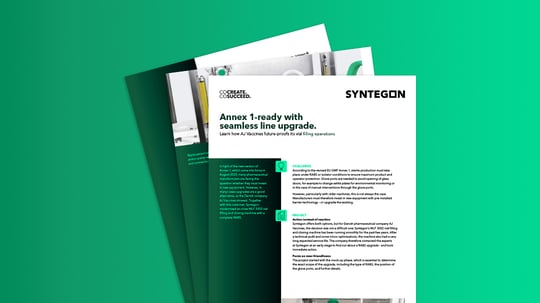
AJ Vaccines Case Study
Learn how AJ Vaccines future-proofed its line with a RABS-update from Syntegon.

Frequently asked questions
Syntegon vial filling machines and vial filling lines typically cover vial volumes from 2 to 500 ml. You can run small clinical batches and large commercial batches on the same aseptic vial filling platform, with format parts and transport systems designed for gentle handling.
Yes. Syntegon designs complete vial filling lines from formulation and pretreatment through sterilization, filling and closing, freeze drying and inspection. Fillers, vial filling isolators or RABS, freeze dryers and inspection systems use standardized interfaces and one automation philosophy.
This helps reduce risky interfaces and is designed to help you meet Annex 1 focused contamination control needs.
The pharmaceutical vial filling machines are ready for isolator or RABS integration and feature hygienic design, CIP/SIP capability and options for integrated PUPSIT filter test racks. 100% in process control and inline inspection concepts help monitor each vial and support Annex 1 focused contamination control and documentation.
Designs aim to keep operator intervention low so you can combine sterility assurance with flexible operation.
In many cases, yes. Syntegon focuses on modular vial filling equipment and standardized interfaces, so you can add barrier systems, Telstar freeze dryers or new filling technologies later without rebuilding the entire line.
Retrofittable PUPSIT racks, single use fluid paths and digital upgrades can also increase flexibility and reduce downtime. Concrete upgrade options depend on line age and configuration.
Syntegon aseptic vial filling equipment supports multiple systems, including rotary valve piston pumps, time pressure filling, peristaltic pumps, mass flow and rolling diaphragm pumps.
You can combine stainless steel multi use paths with single use assemblies where they add value. This helps you process liquid, lyophilized, oily and highly viscous products on one flexible vial filling platform.
Interested in vial filling machines?
Talk to a Syntegon expert to learn more about vial filling machines.
News
Discover how Dr. Barbara Fretter and Syntegon enhance OSD production reliability through expert process development from the very start.
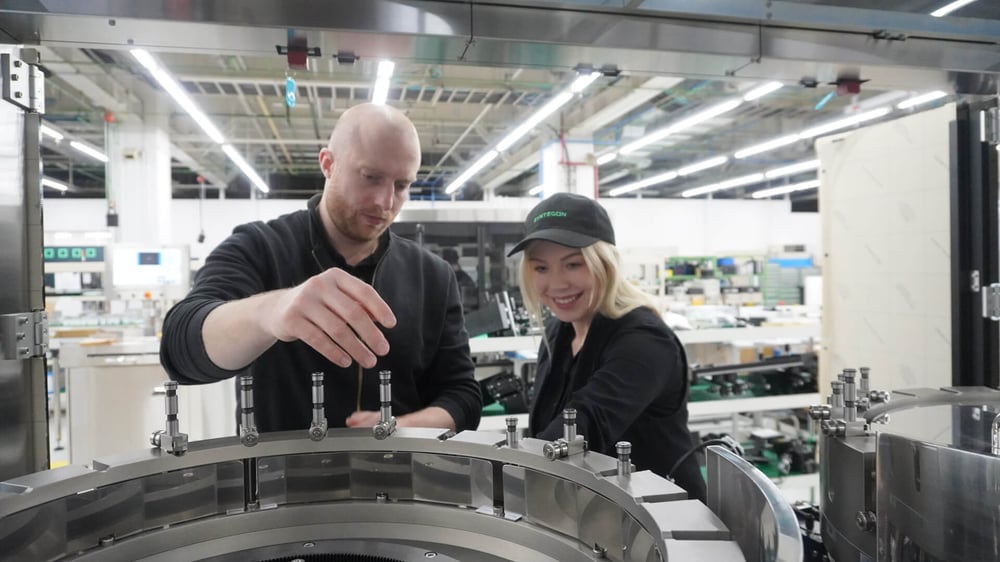
Discover how Syntegon's experience and innovative co-creation enhance inspection machines, as explained by mechanical design engineer Sebastian Fischer.
Markus Heinz receives the PDA James P. Agalloco Award, recognizing excellence in pharma education and cross-industry collaboration.
Syntegon Newsletter
Get inspired with regular updates on technologies and services, case studies, webinar offers and events.